
Chassis No.
26285
{{lr.item.text}}
Offered Without Reserve
{{bidding.lot.reserveStatusFormatted}}
Charles and Frank Duryea are widely considered the Wright brothers of the American automotive industry. Through trial and error, reportedly using only books borrowed from the Springfield, Massachusetts Public Library, the two developed the first gasoline-powered automobile in American history in 1893. Together they formed the Duryea Motor Wagon Company, the first American automobile manufacturer. Driving a single-cylinder, four-horsepower Duryea Motor Wagon on a snowy Thanksgiving Day in 1895, Frank Duryea won the Chicago Times Herald race in Chicago, the first automobile race on American soil. The brothers monetized their racing publicity and continued their efforts, winning the first running of Britain’s infamous London to Brighton "Emancipation Run" in 1896.
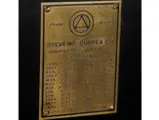
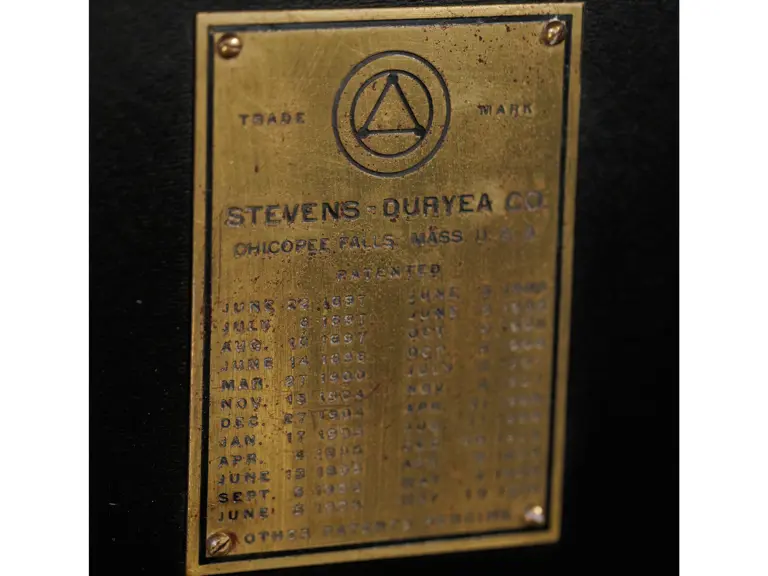
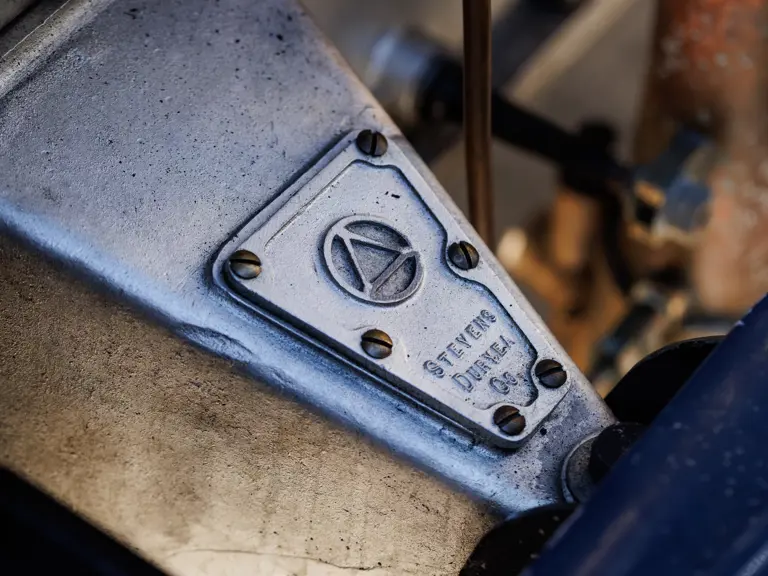
Financial disagreements caused the brothers to dissolve their partnership in 1898, with Frank going on to found a new company, Hampden Automobile and Launch. After Frank Duryea’s Hampden prototype came to the notice of the J. Stevens Arms & Tool Company in nearby Chicopee Falls, Massachusetts, the name of the car was changed to Stevens-Duryea; for the next 26 years, Chicopee Falls would see production of some of the finest automobiles of the Brass Era. Their cars were designed and priced on par with Packard, Pierce-Arrow, and other iconic American luxury names of the day. Stevens-Duryea advertisements touted, “There Is No Better Motor Car.”
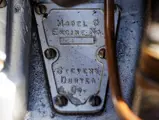
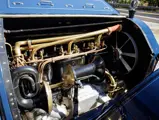
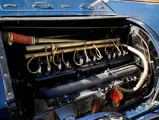
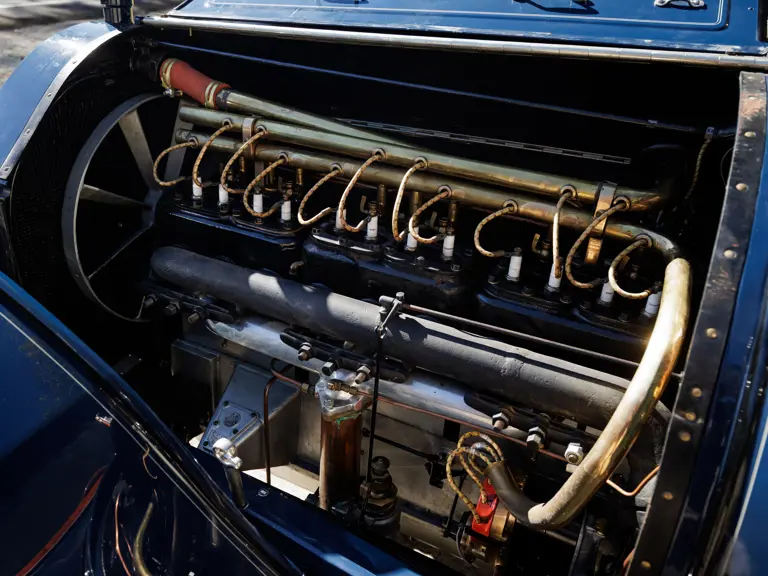
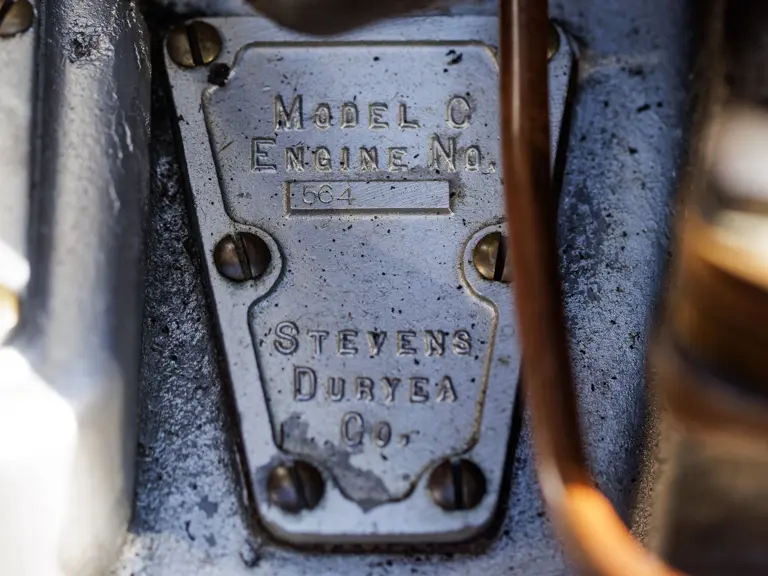
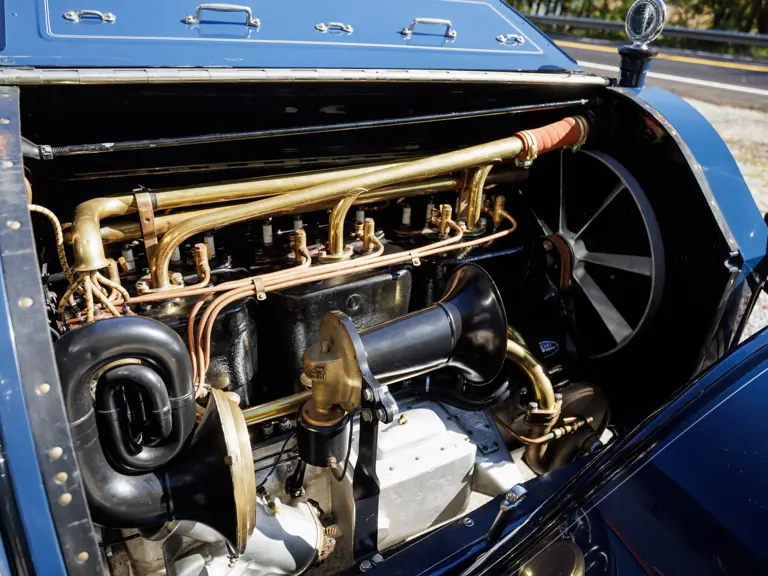
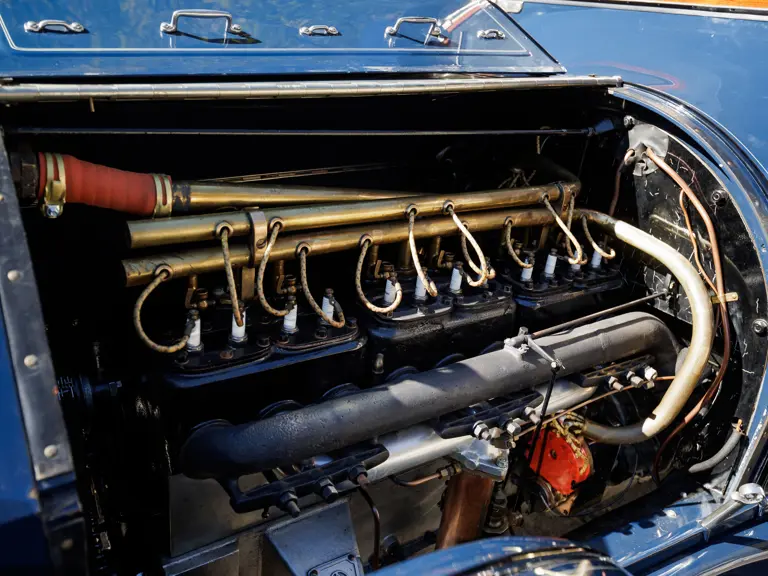
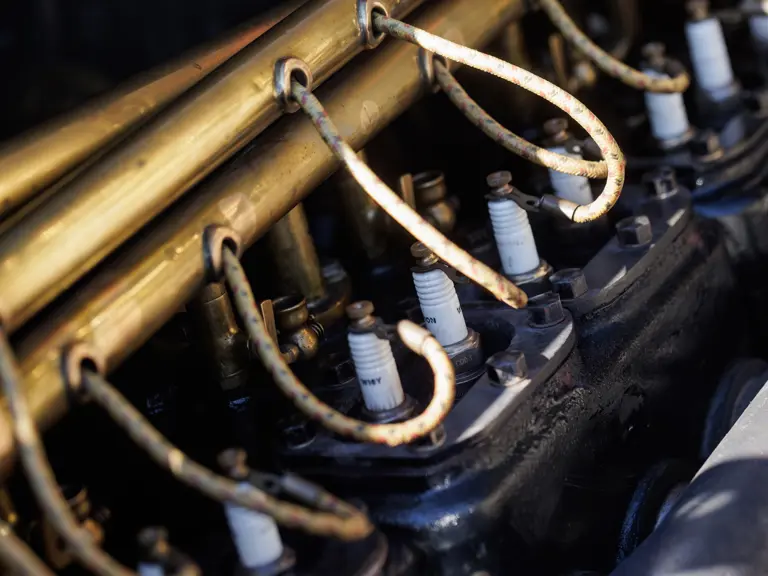
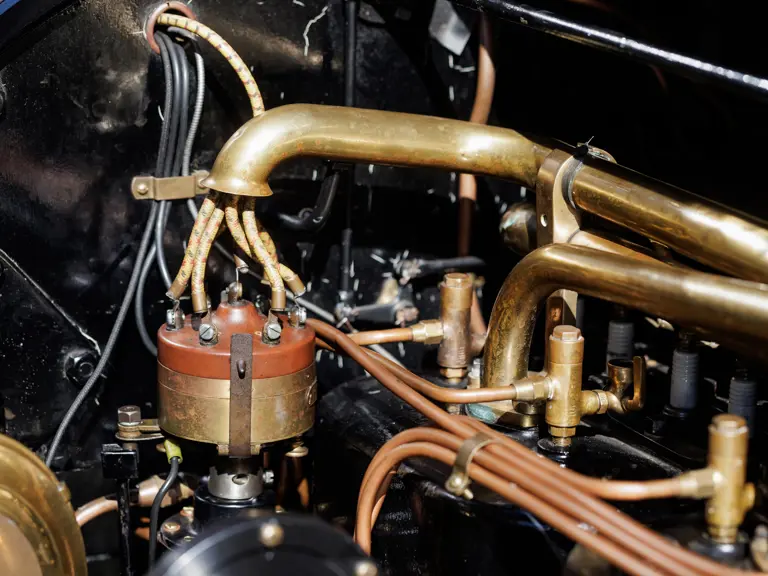
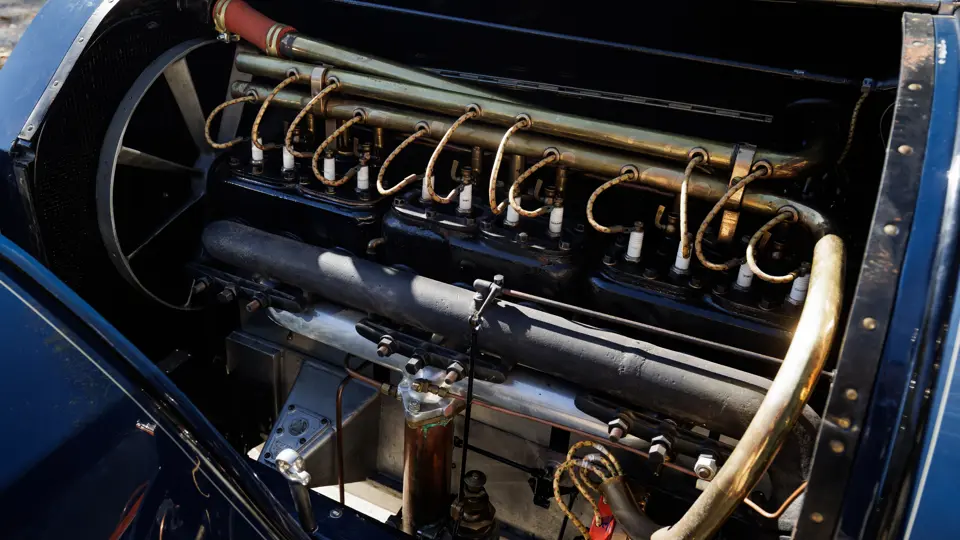
By 1913, the line incorporated two lengths of wheelbase, 131 inches and 138 inches, each with a 45-horsepower, six-cylinder engine fitted with dual ignition, a three-speed transmission, and shaft drive. The Model C-Six, as it was known, could move along the nation’s growing roads with considerable power, speed, and reliability.
Only nine Model C-Sixes are known to survive, seven of which are said to be mounted on the “short” 131-inch wheelbase chassis. They figure into some of the world’s greatest Brass Era collections and are treasured by those who enjoy long drives on Horseless Carriage Club of America events and the Glidden Tour.
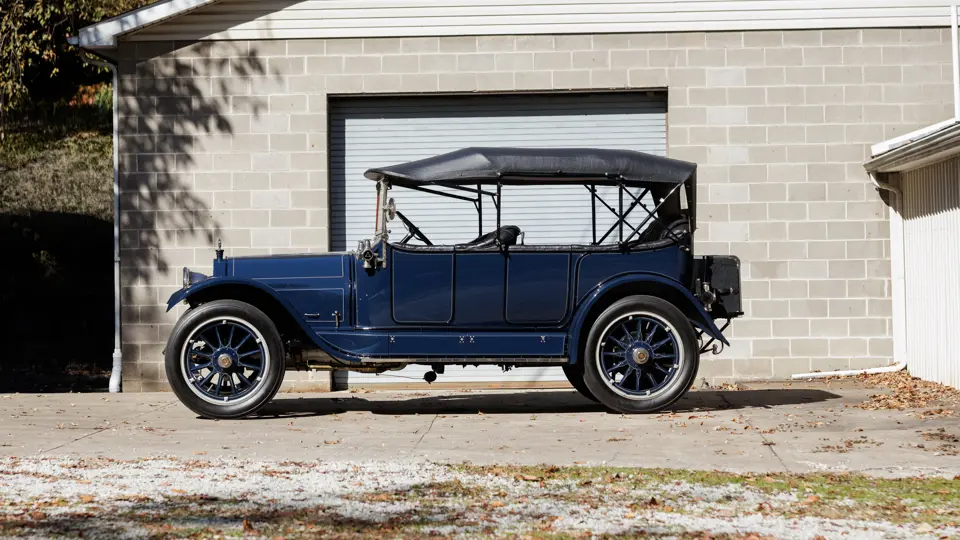
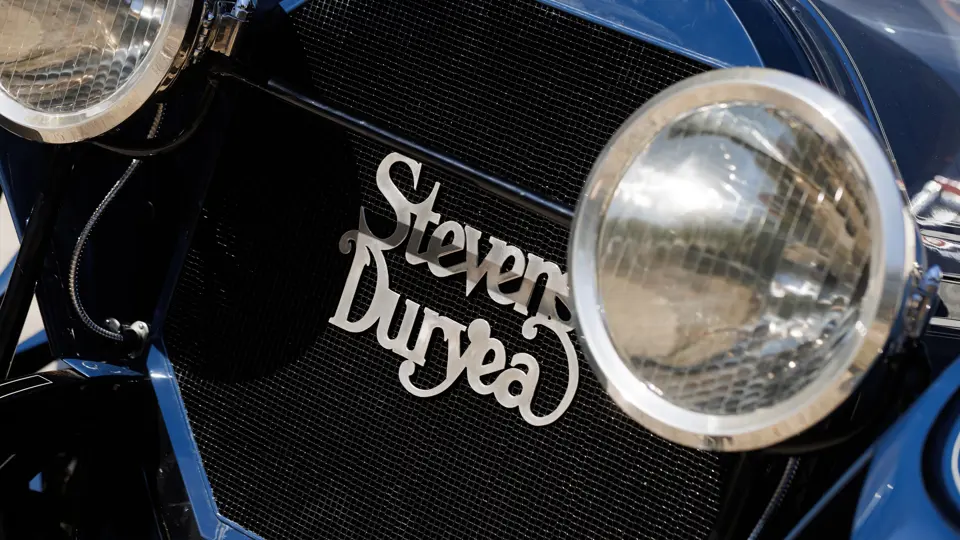
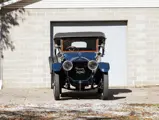
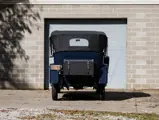
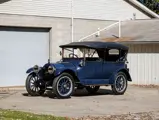
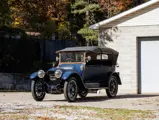
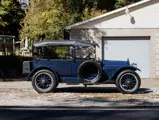
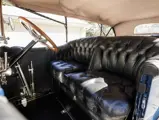
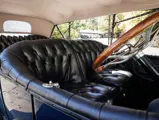
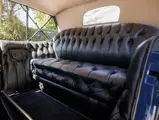
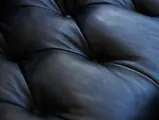
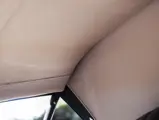
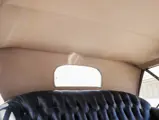
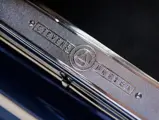
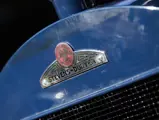
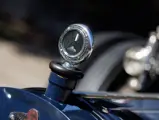
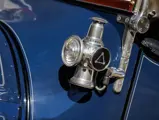
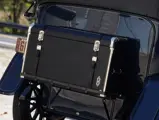
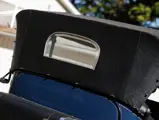
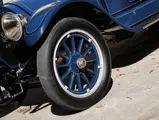
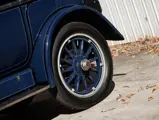
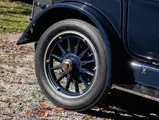
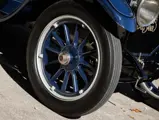
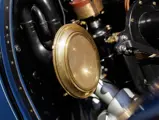
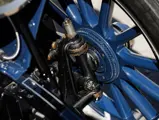
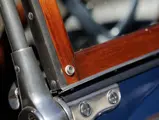
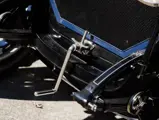
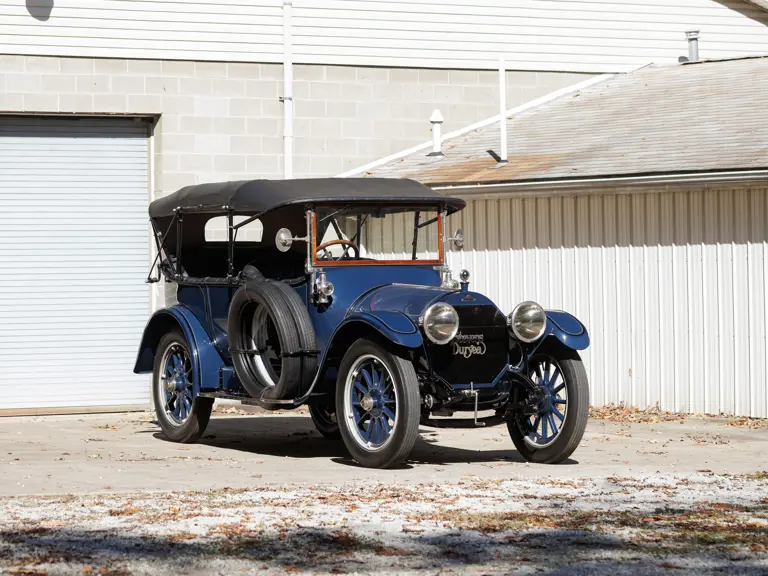
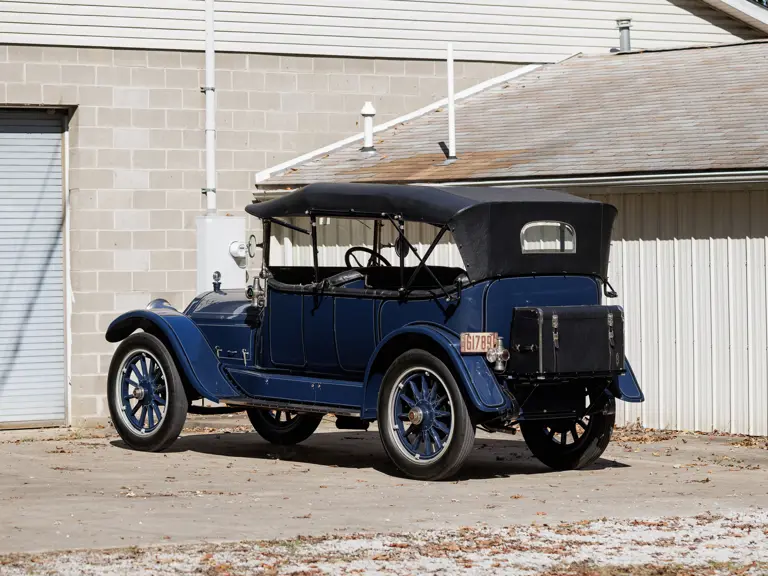
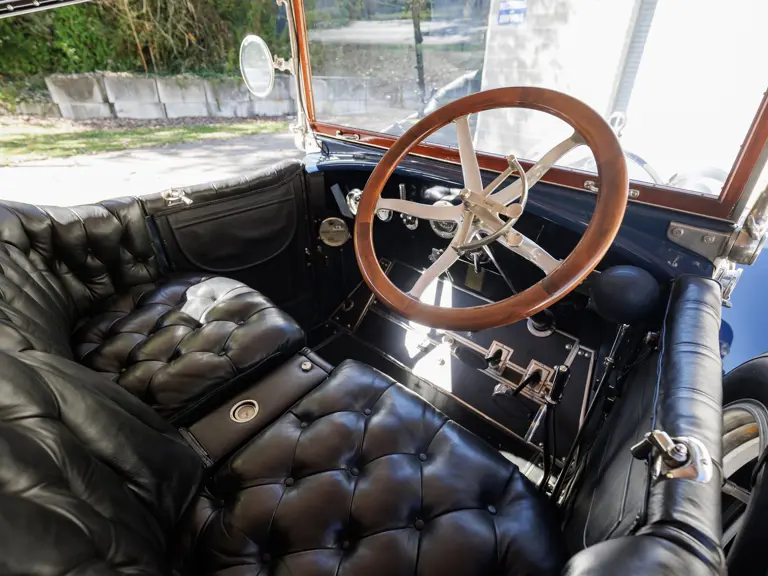
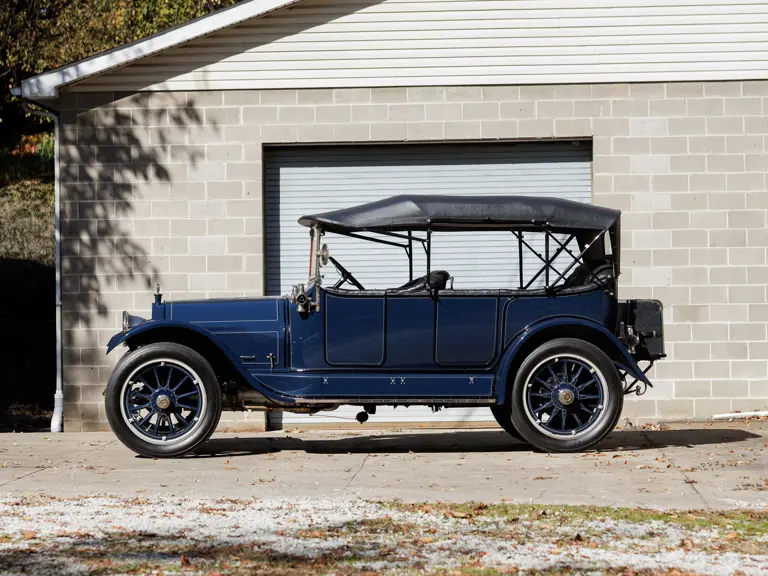
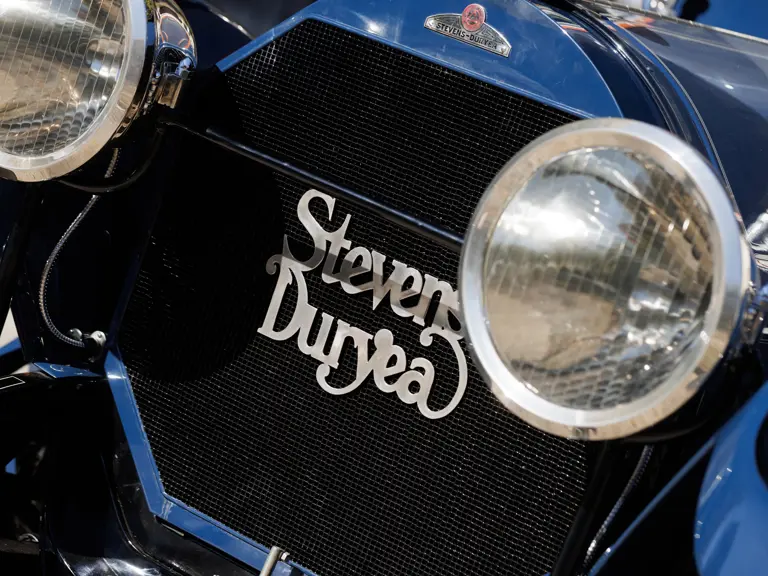
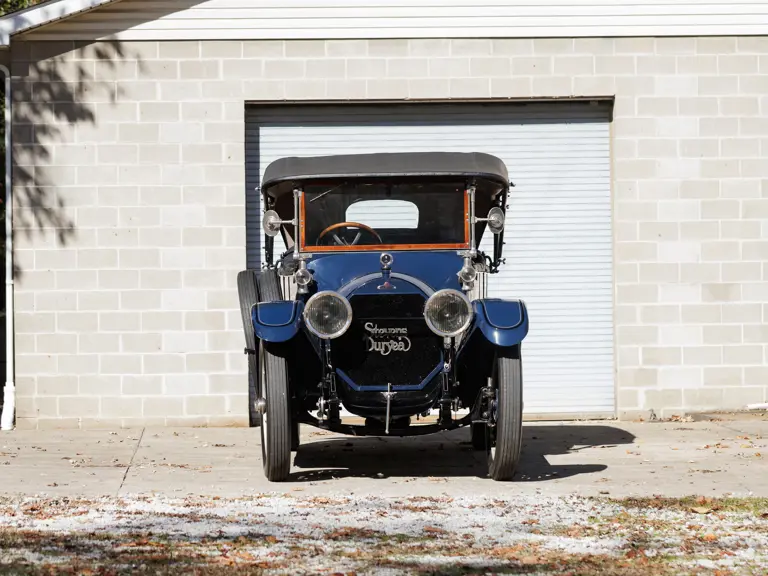
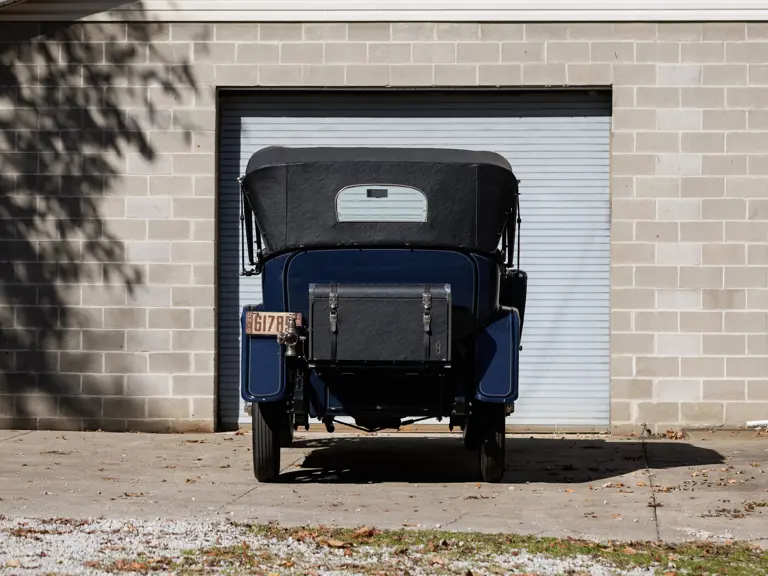
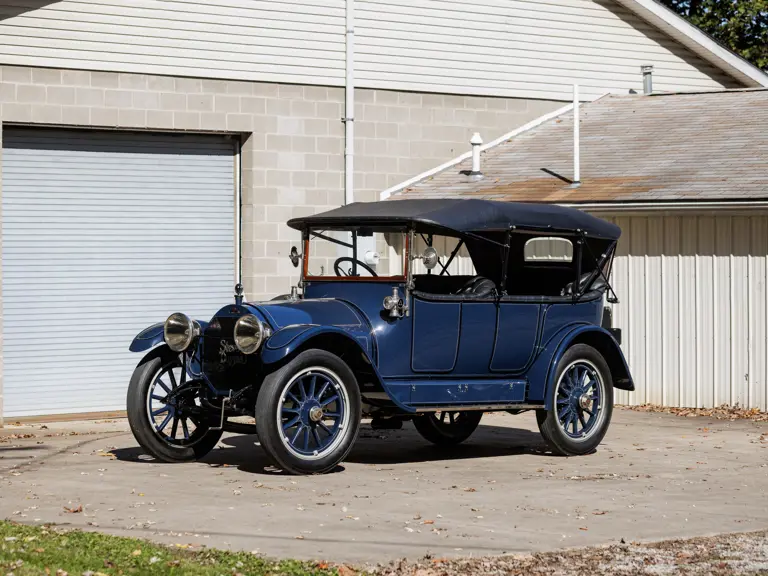
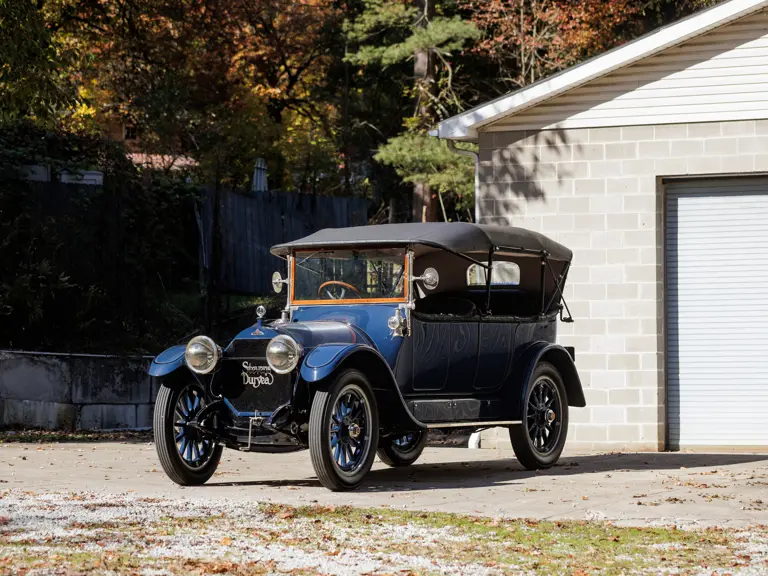
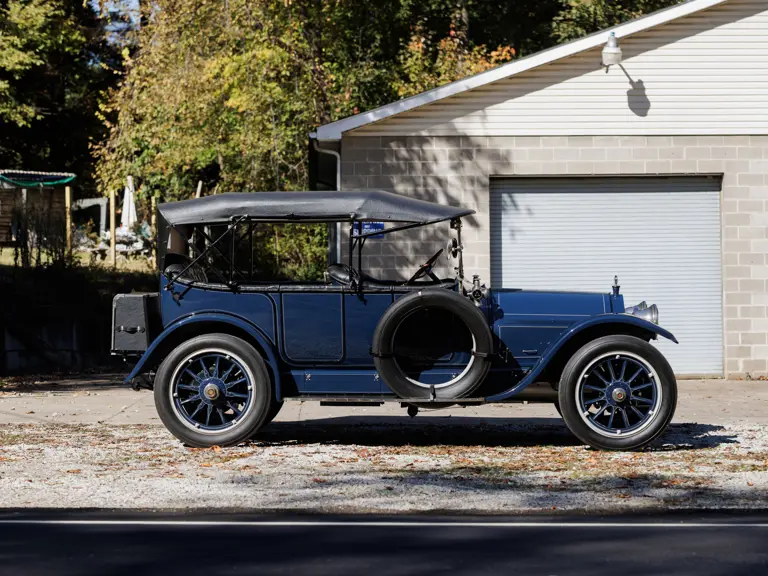
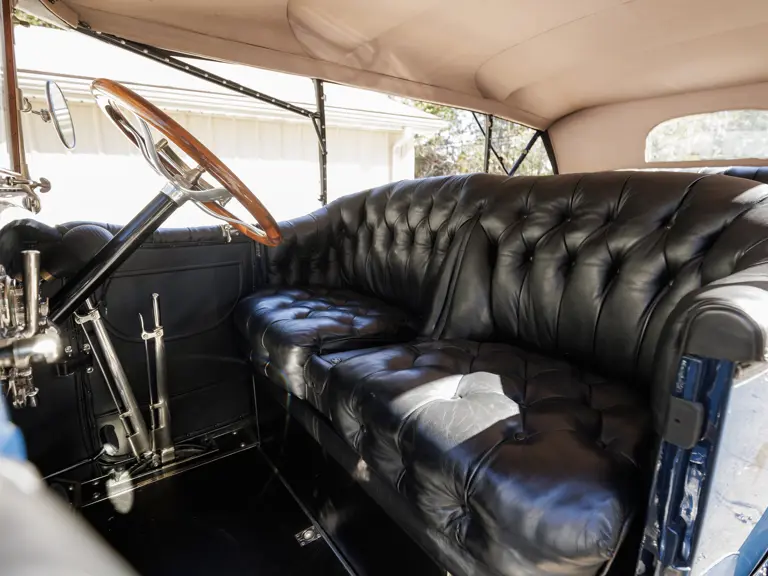
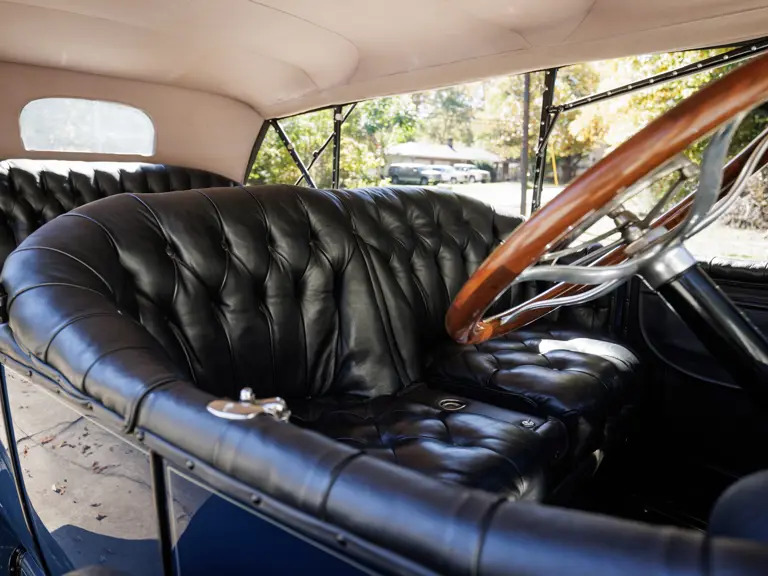
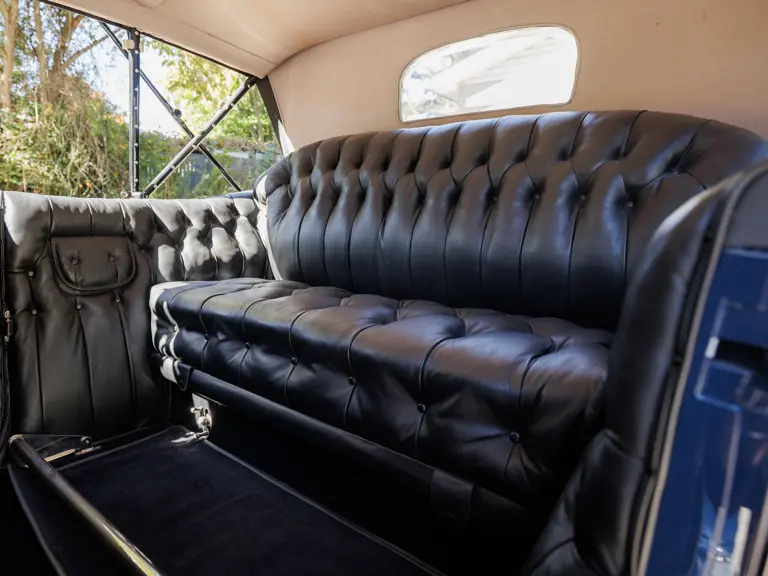
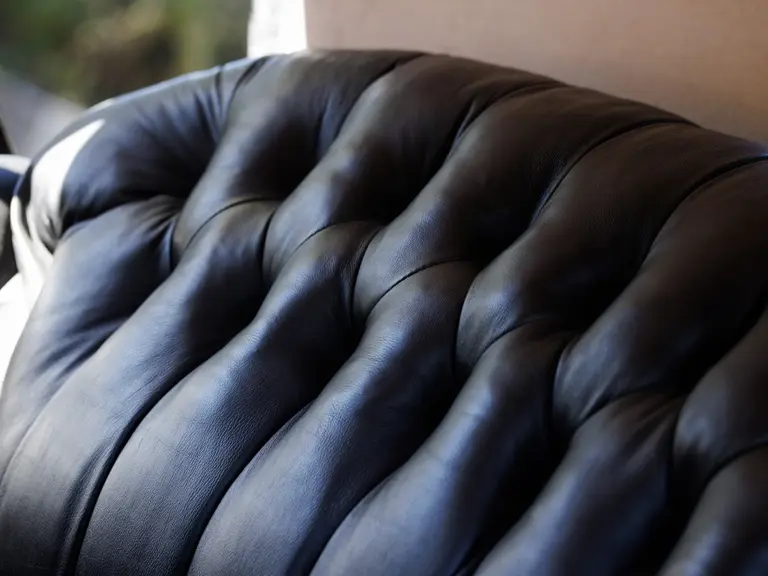
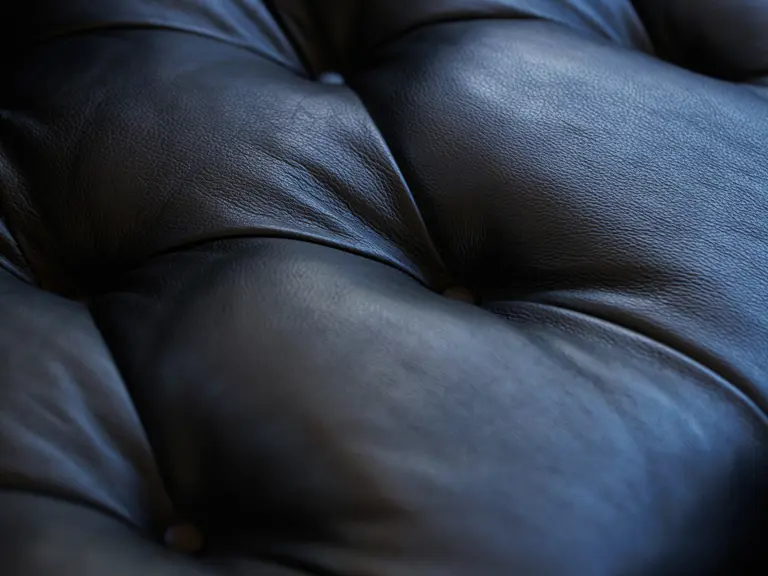
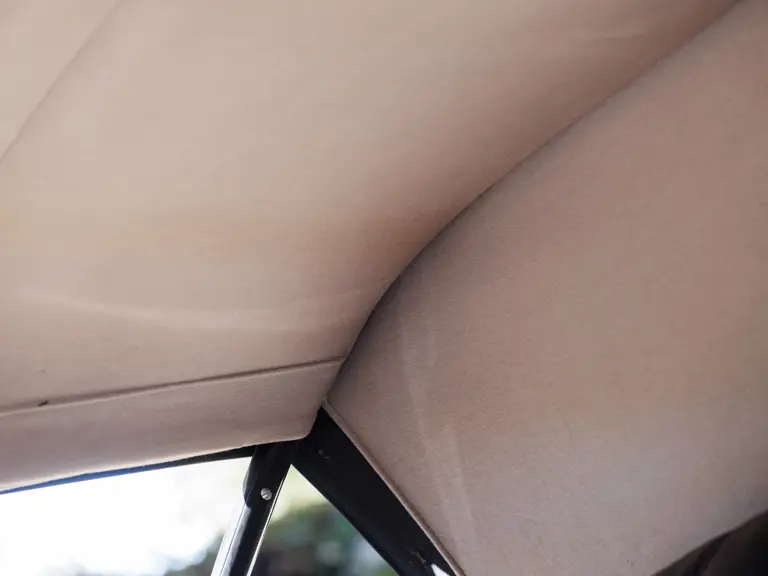
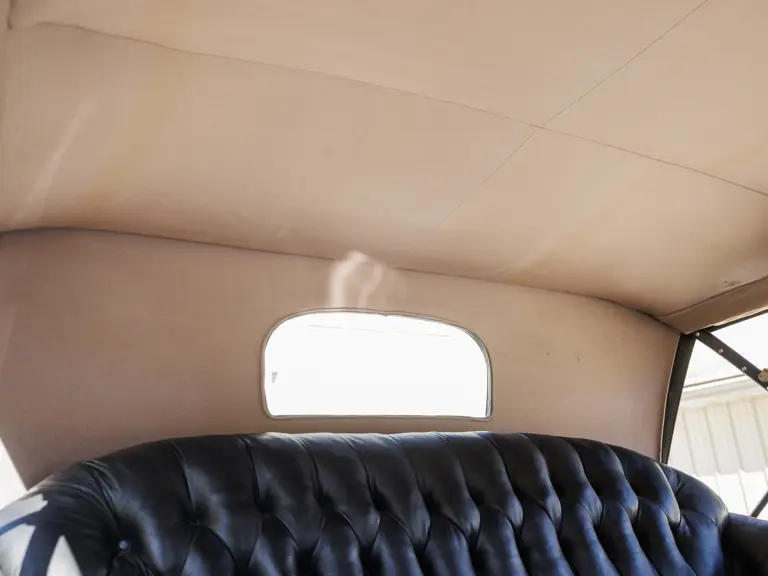
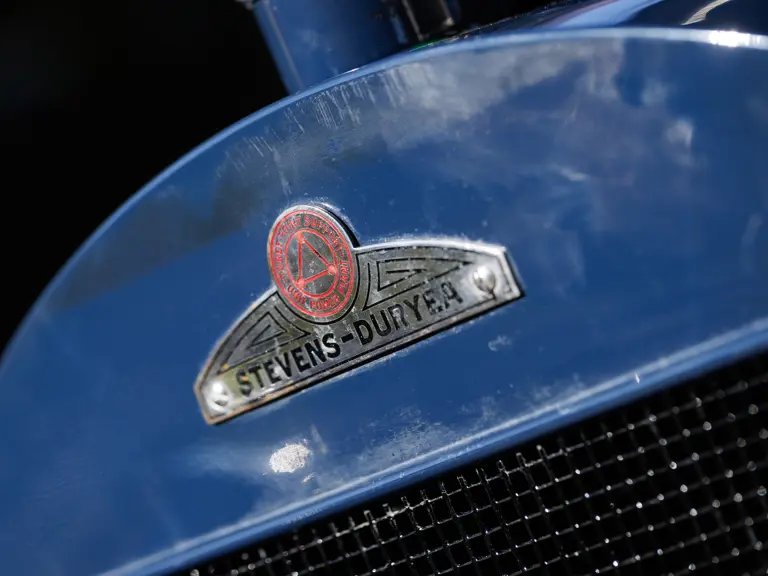
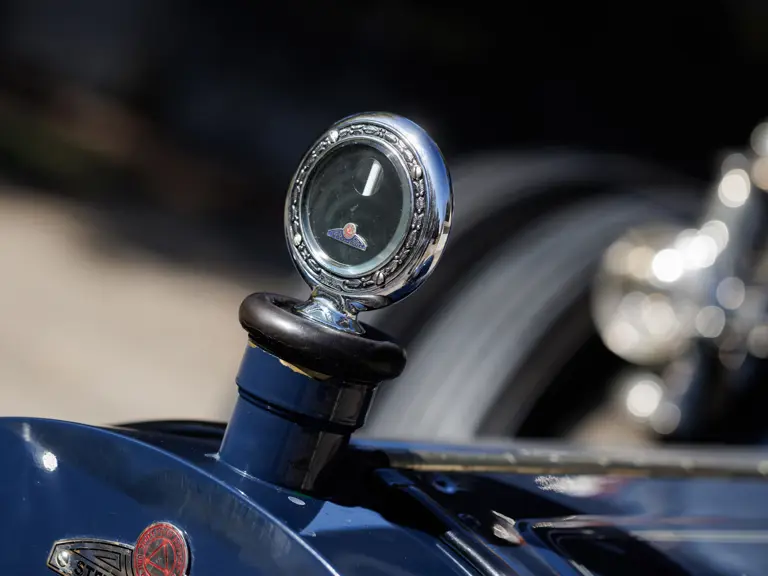
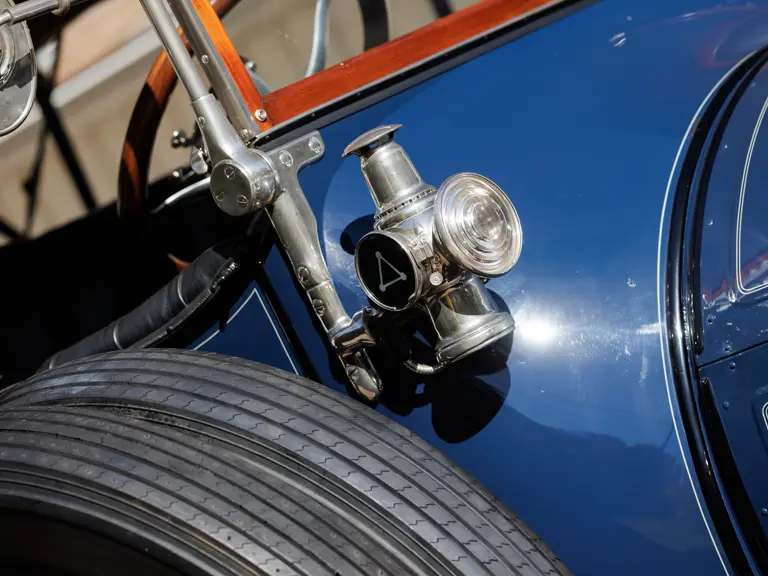
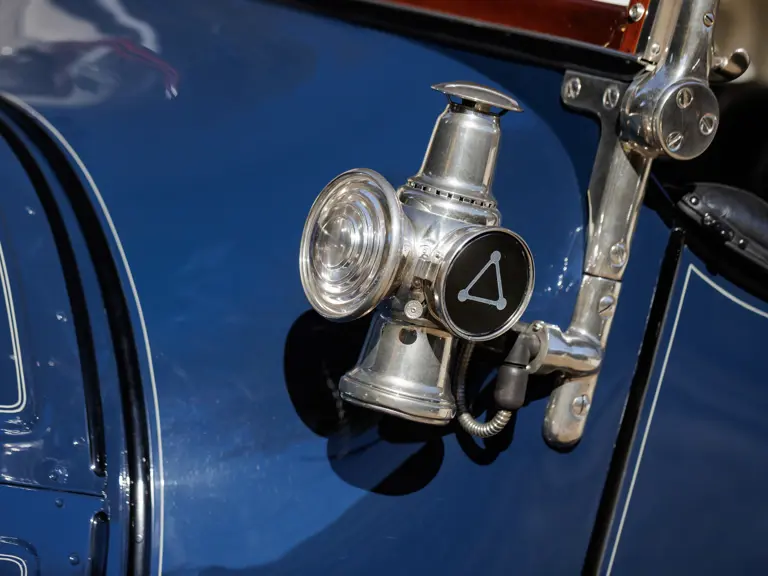
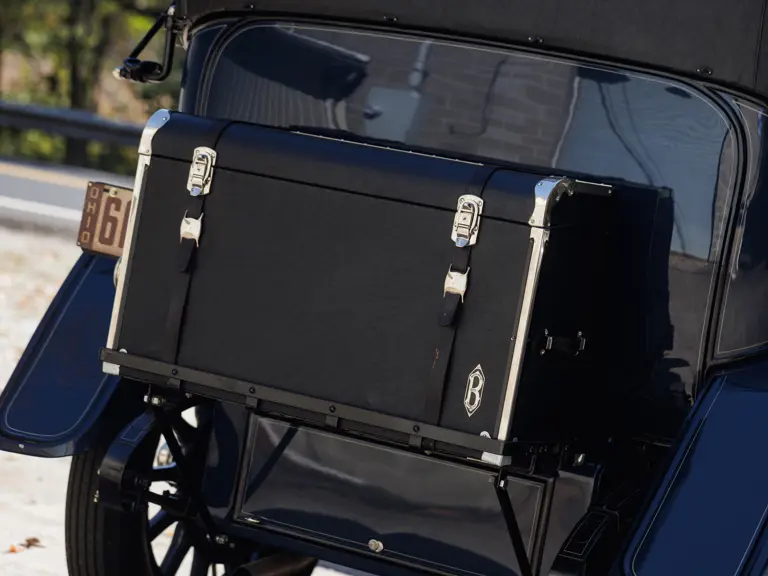
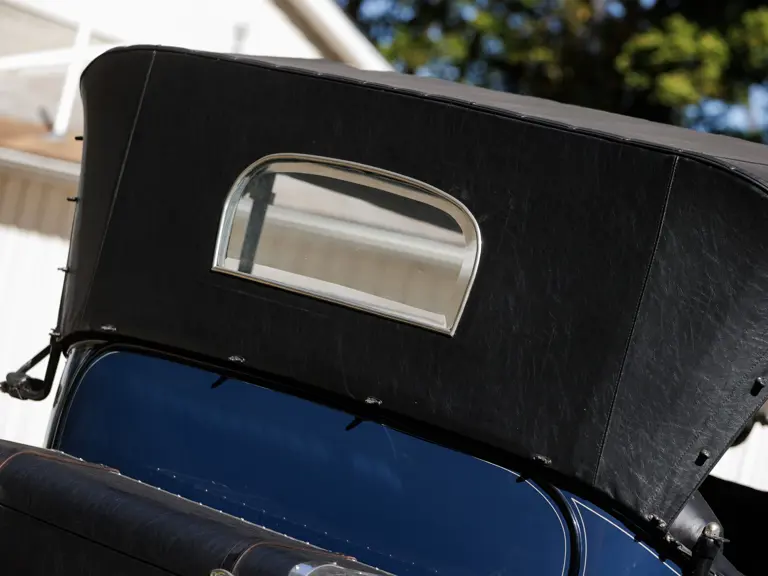
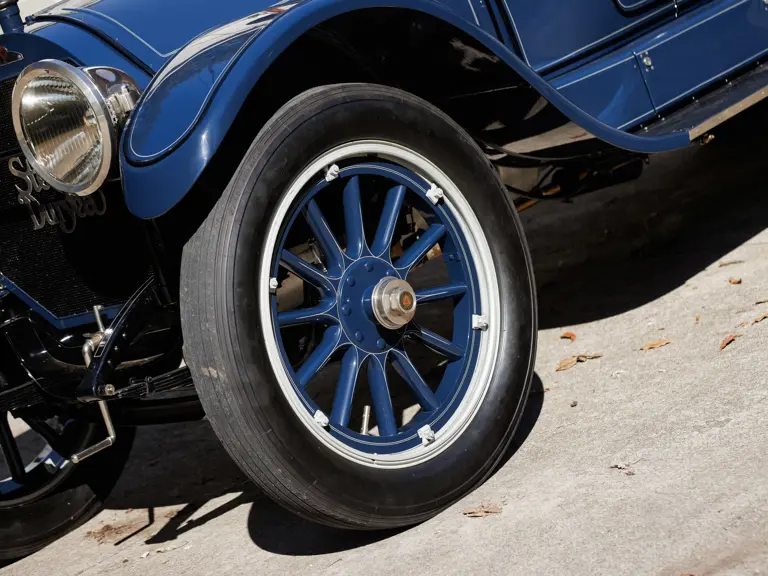
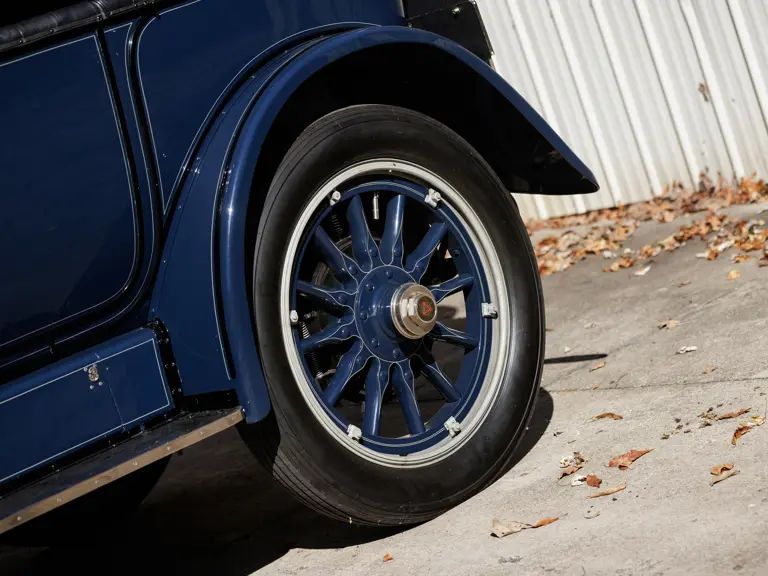
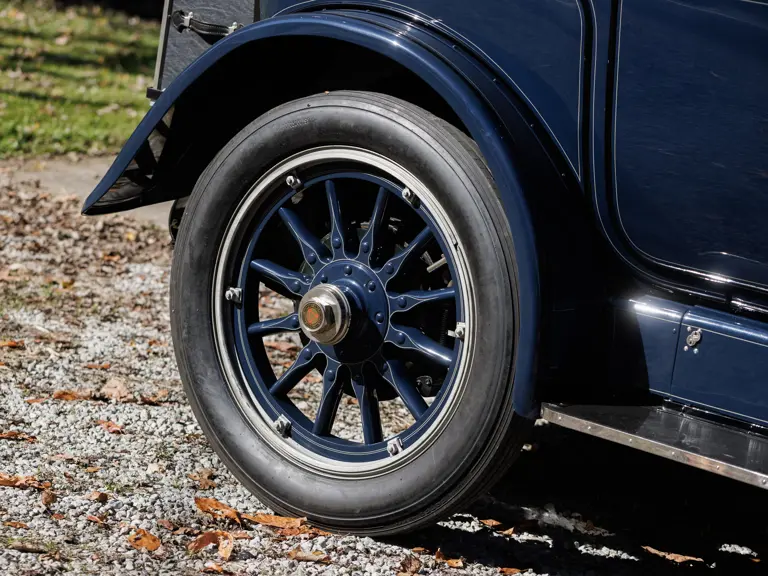
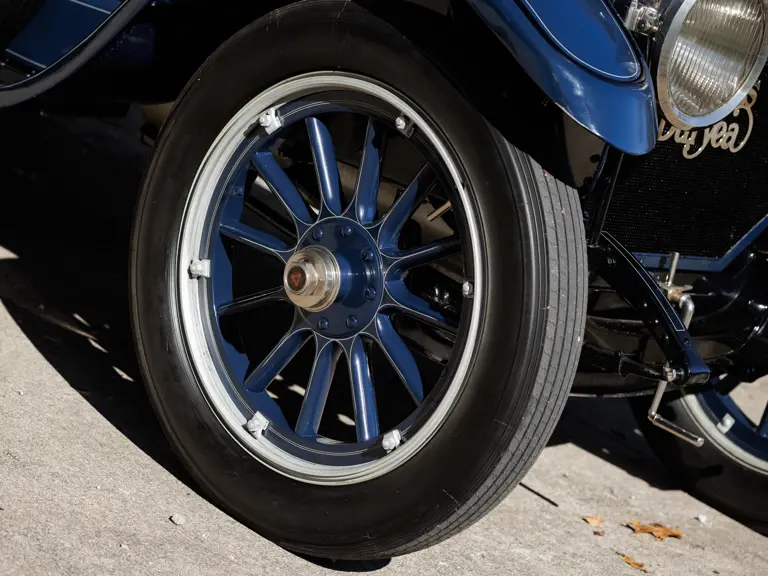
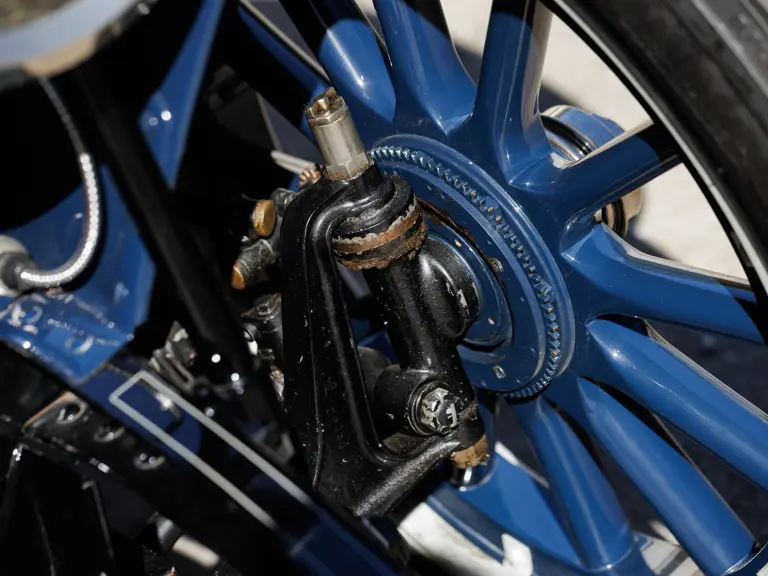
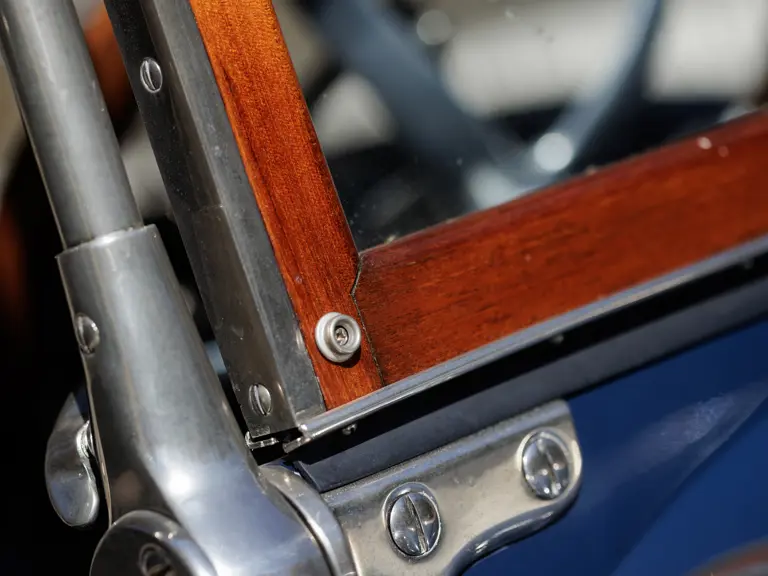
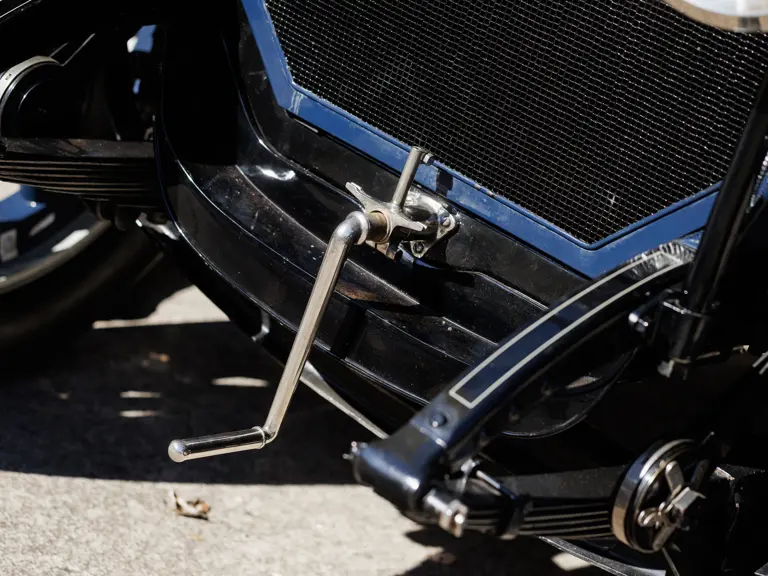
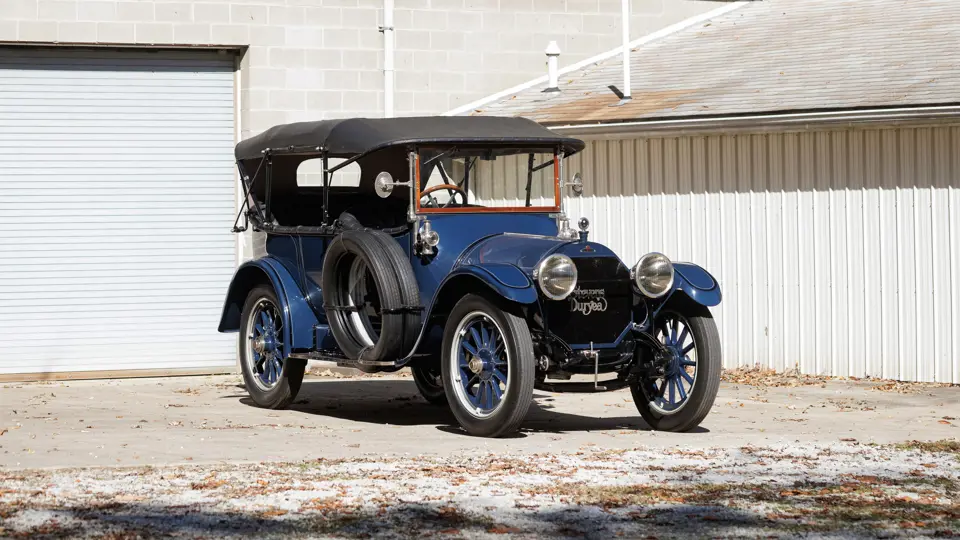
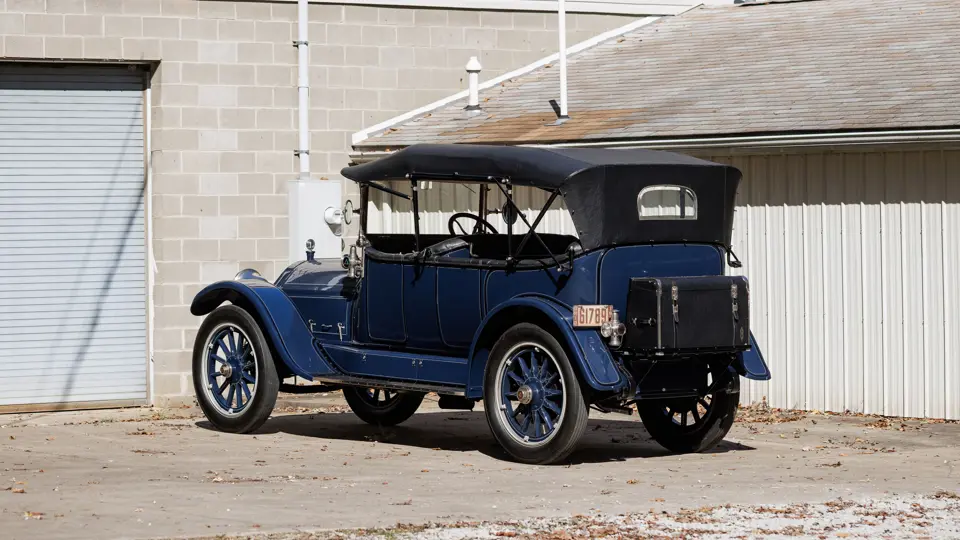
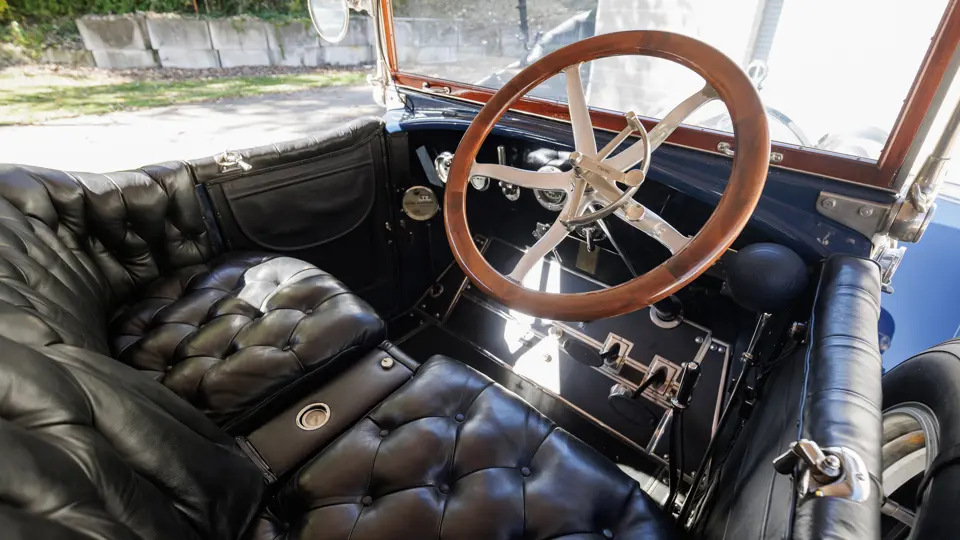
Fully restored under prior ownership in 2008, the example offered here remains in excellent overall condition. Handsomely finished in a rich dark blue with light gray pinstriping over black leather upholstery, the car also sports one of the era’s most luxurious convertible soft-tops, finished in black canvas with a grey fabric liner and glass rear window. The nickel trim, a pleasing contrast to the brass typically used in this era, shines beautifully, including the Stevens-Duryea script, headlamps, and accessory Boyce Moto Meter.
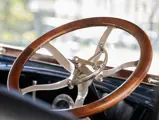
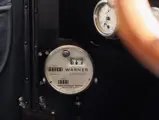
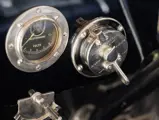
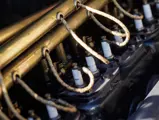
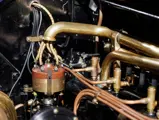
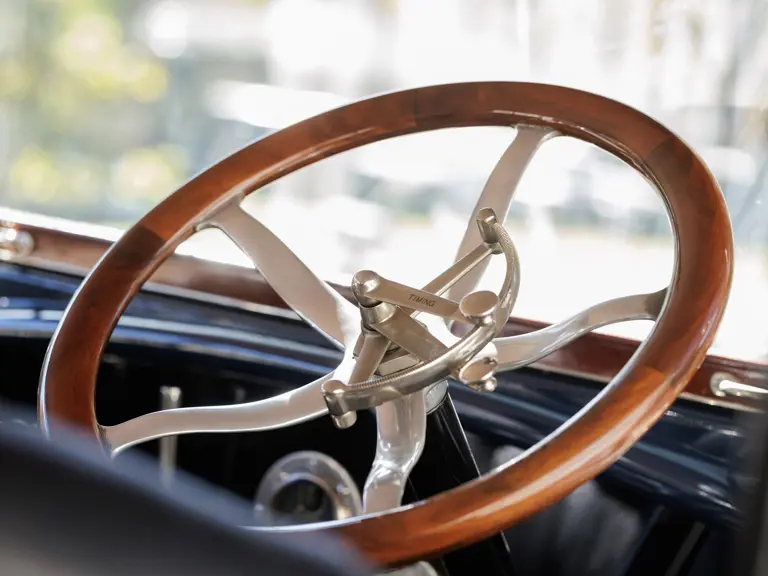
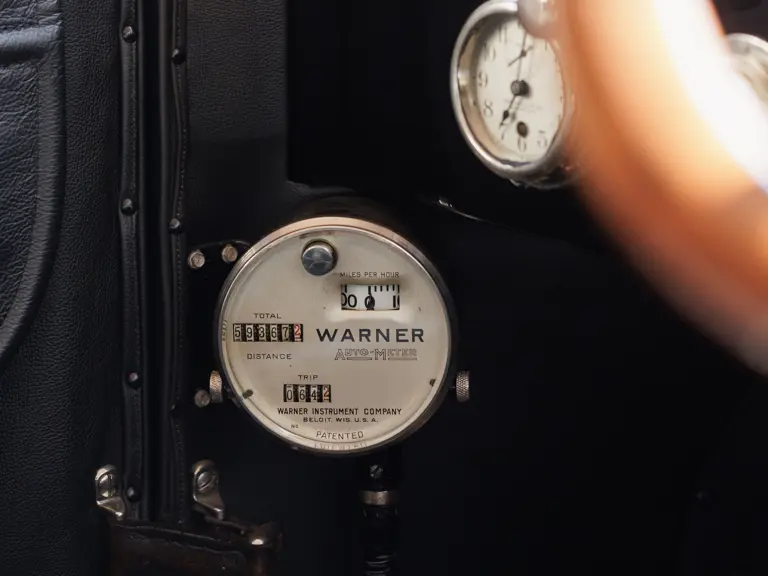
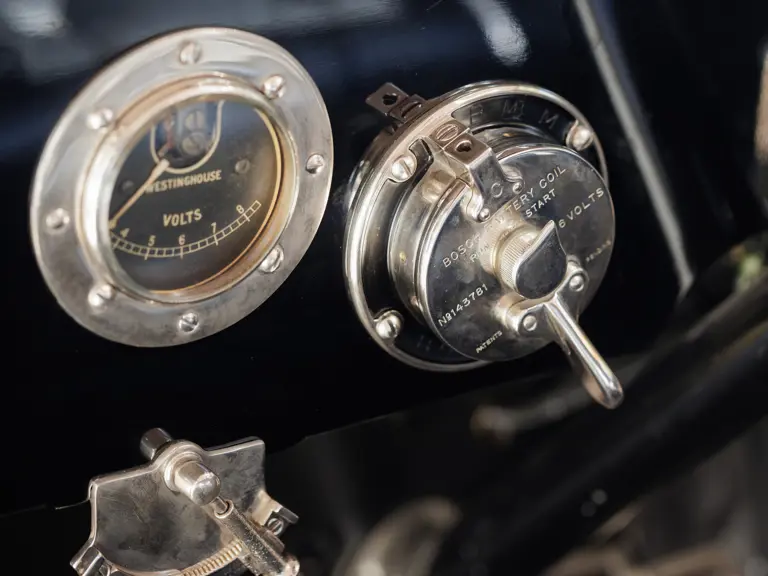
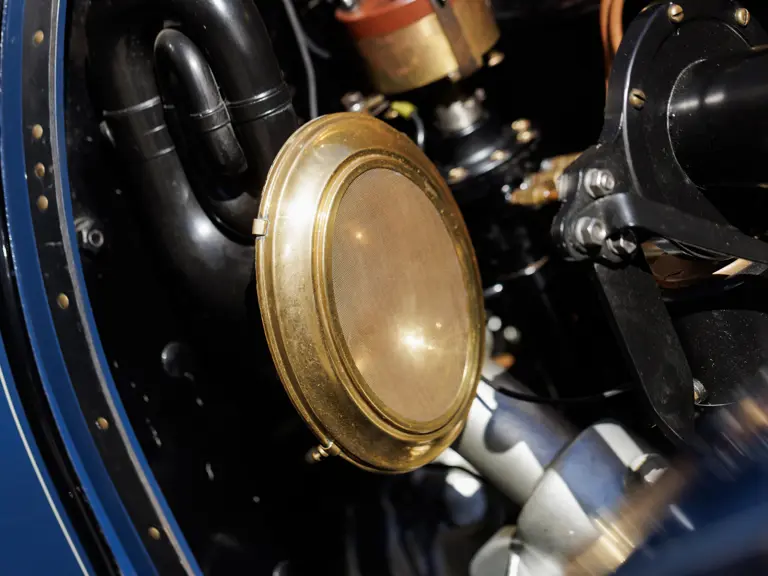
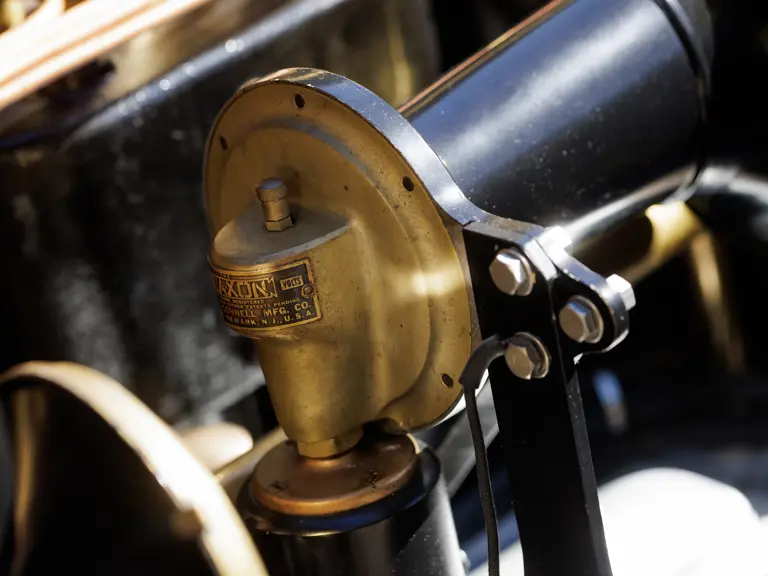
The dash houses a full assortment of gauges unheard of for the period. Among them, a Warner Autometer contains the speedometer, odometer, and trip odometer. Other instrumentation includes a Westinghouse voltmeter, a pressure gauge for the original Kellogg air-starting system, and a Boston Clock Company timepiece. The engine has been fitted with an electrical starting system. Mechanical work said to have been performed under previous ownership includes the fabrication and installation of a new rear axle and driveshaft. The transmission, carburetor and engine dampener are said to have been rebuilt as well. Following its restoration, the Stevens-Duryea was shown at the 2011 Concours d’Elegance of America, followed by the 2015 Pebble Beach Concours d'Elegance.
A car with presence and power, proudly bearing the name of an American automobile industry pioneer, this rare Stevens-Duryea Mode C-Six would be a wonderful acquisition for a veteran Brass Era collector. It is equally suitable for an enthusiast eager to newly discover one of the finest machines of this formative period in automotive history.
 | Phoenix, Arizona