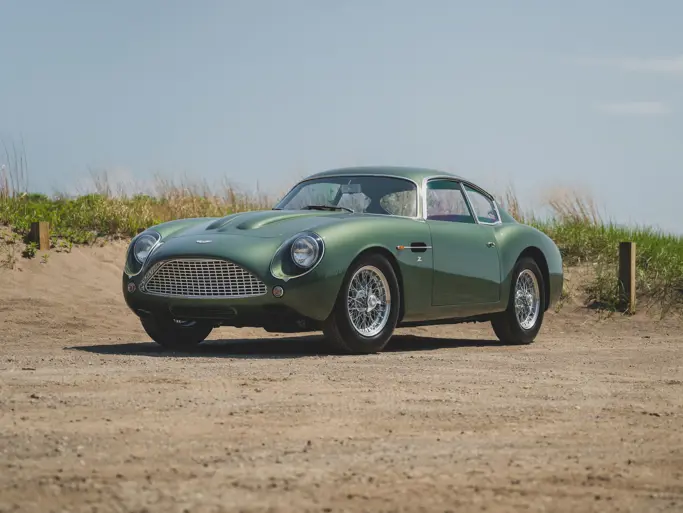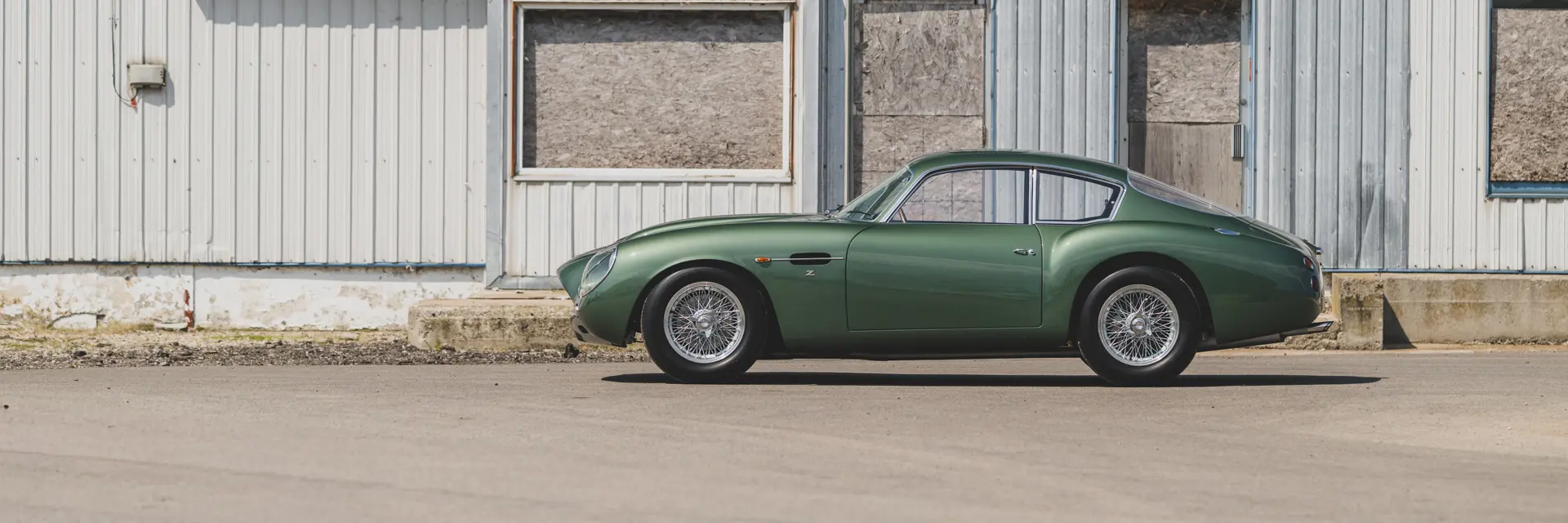
The Aston Martin DB4 GT Zagato may have been designed with competition in mind, but through a laser focus on function came one of the most beautiful forms to ever grace a race circuit, says James Page.
Aston Martin had enjoyed a golden summer in 1959. Its DBR1 had won the blue-riband 24 Hours of Le Mans, plus the Nürburgring 1,000 km and the RAC Tourist Trophy—a run of success that ensured the marque claimed the World Sportscar Championship ahead of Ferrari and Porsche. But then, in the aftermath of its greatest success, it withdrew from top-level sports car racing.
That October, at a dinner in London, company owner David Brown explained why. He said that “the sports-racing car of today has become a more complicated and expensive version of a Grand Prix car” and that “I would like to see sports car racing where the cars are closely allied to what the public can buy.” He therefore announced that the Aston Martin factory team would instead be concentrating upon Formula 1 for 1960; sadly, that turned out to be a short-lived and unsuccessful programme.
Fortunately, alongside the highly specialised world of sports-racing cars there existed a flourishing class for Grand Tourers that came increasingly to the fore during the early 1960s. At least loosely related to the world of roadgoing production cars, this was exactly the sort of racing that Brown had envisaged, and it was little wonder that Aston Martin was at the heart of a short-lived arms race that also included Ferrari, Jaguar, and Shelby. During that period, each built ‘homologation specials’ that are now among the most coveted cars ever made: the Ferrari 250 GTO, Jaguar Lightweight E-Type, Shelby Daytona Coupe, and Aston Martin DB4 GT Zagato. These were often campaigned not by the factory team but by an official dealer or distributor, such as Luigi Chinetti for Ferrari and John Coombs for Jaguar, and were also sold to private owners around the world.
Among those was wealthy Australian businessman Laurie O’Neill, who ordered a new DB4 GT Zagato and received chassis number 0186/R in time for the 1962 season.
The roots of this model could be traced to 1959, when Aston Martin introduced the DB4 GT, a lighter, more powerful, short-wheelbase version of its Touring-bodied DB4. It had been developed very much with competition use in mind, and the prototype made its debut at Silverstone that year in the hands of Stirling Moss and comfortably won its race.
Throughout the following season, however, the DB4 GT went up against Ferrari’s latest development of the 250 GT, the Short Wheelbase, and it proved to be a chastening experience. At 3.7 litres rather than 3 litres, its six-cylinder engine had a capacity advantage over the V-12 Ferrari, but dynamically the Aston was no match for the car from Maranello.
The concept clearly needed to be developed further, so Aston Martin looked not to Touring, but to another great Italian coachbuilder. Carrozzeria Zagato had been founded in 1919 by Ugo Zagato, who’d worked for the Ansaldo aircraft company during WWI. The experience led to him producing designs that were streamlined and lightweight, and his Milan-based company became famous during the 1920s and ’30s for its work on Alfa Romeo’s highly successful competition cars.
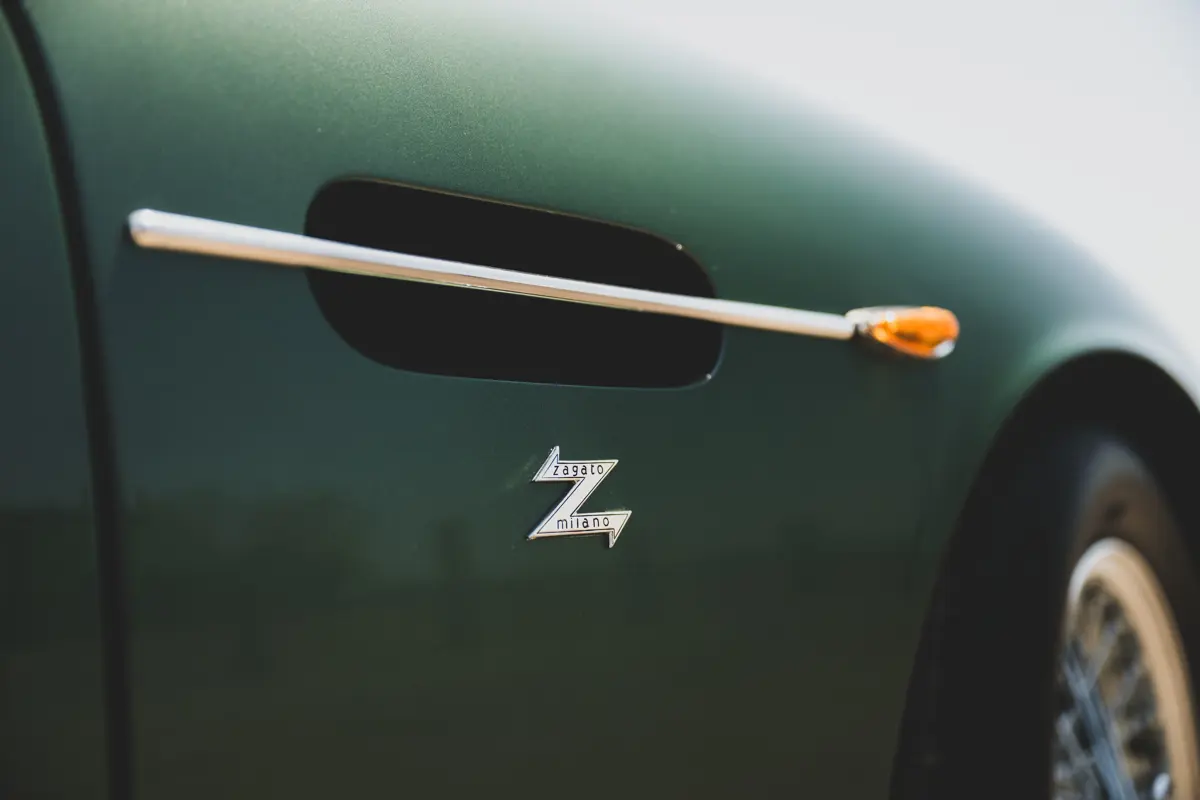
Following WWII, Ugo was joined by his sons Elio and Gianni, two contrasting characters who perfectly complemented each other. Elio was more outgoing and a talented racing driver whose feedback helped to guide future designs, while the multilingual Gianni was more reserved and specialised in the manufacturing and production side of the business. Together, they ensured that Zagato remained true to the principles established by their father, who was still very much involved in the late 1950s and was often the first person to arrive for work every morning.
During that period, the company started doing more projects for British manufacturers, and a Zagato-bodied Bristol 406 was unveiled at the 1960 Geneva Motor Show. Story has it that the car was seen there by David Brown and his General Manager John Wyer, who until recently had been in charge of Aston Martin’s competition programme. They decided to task Zagato with producing a highly specialised development of the DB4 GT that would allow them to go toe-to-toe with Ferrari.
Three chassis were duly sent to Italy with instructions for the car to be ready for the London Motor Show in October 1960. The compressed timescale was no problem for Zagato, which was a small company that operated much like a race team. Its designers and artisan craftsmen were used to working quickly, and the lines of the DB4 GT Zagato were the work of a young Ercole Spada. He drew the shape in 1:1 scale, something he’d told Zagato he could do when he first joined the company, but which he’d never actually tried, and was particularly proud of the way that the bodywork followed as closely as possible the mechanical components beneath it.
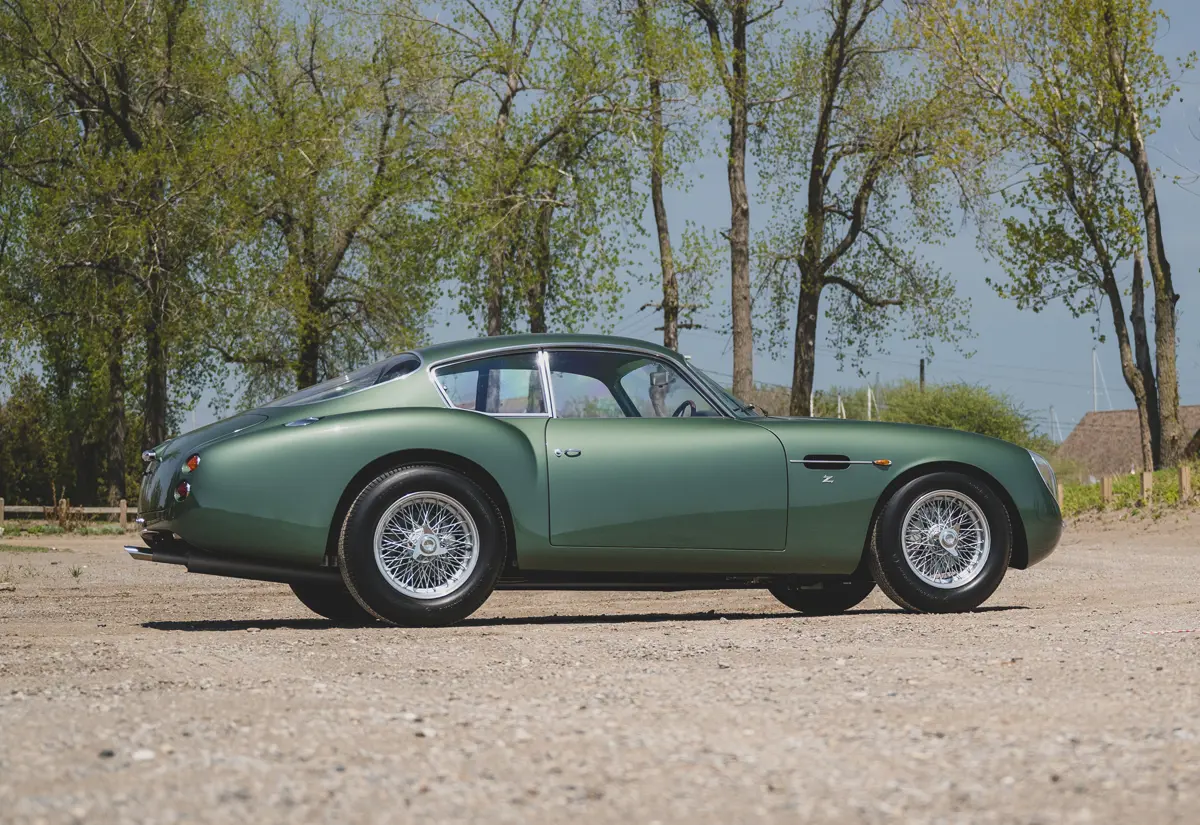
He later reflected that it was “like a skin over bones,” and it was a perfect example of blending form with function, exactly what you’d expect from someone who had trained as an industrial engineer rather than a stylist.
This ‘shrink-wrapped’ form was a recipe that Ferrari also adopted when it developed the 250 GTO through the winter of 1961-62. Manufacturers were first and foremost looking to reduce drag in their designs, an area in which Jaguar aerodynamicist Malcolm Sayer was particularly skilled, even if their parallel aim of reducing high-speed lift was still some years away from extending into the generation of proper downforce.
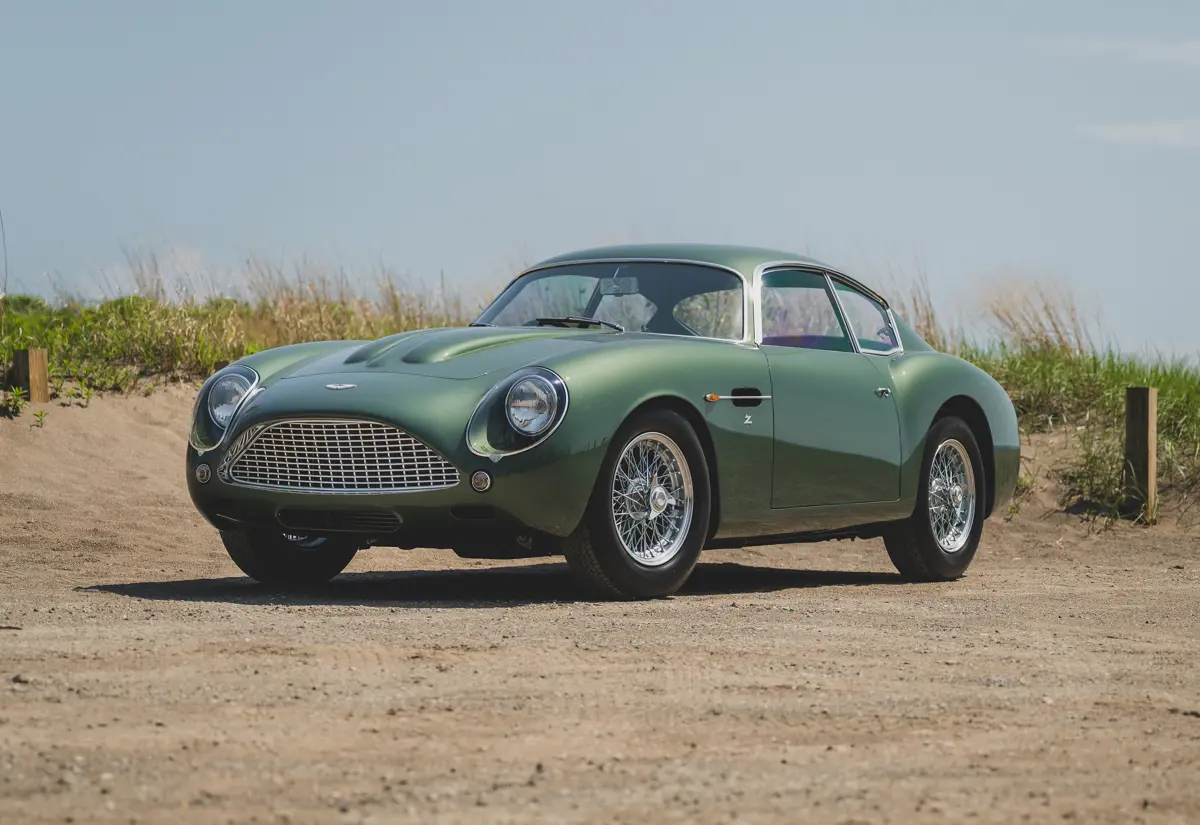
The latest development of the DB4 GT was duly launched at Earls Court in October 1960, when it appeared on the Zagato stand. Even more weight had been saved and, as The Autocar wrote in its issue of 28 October: “Zagato bodies are functional, wind-cheating and attractive in line, rather than luxurious or beautiful. That on the Aston is almost austere, as is appropriate to a road-cum-racing car.”
The taut, muscular DB4 GT Zagato certainly looked the part and was never anything other than spectacular to watch. Its considerable surplus of power over grip meant that only the very best drivers could tame it.
In April 1961, Stirling Moss finished 3rd at Goodwood in a Zagato that had been entered by Rob Walker and Dick Wilkins, while the quasi-works Essex Racing Stable, which was run by a wartime tank officer and successful chicken farmer by the name of John Ogier, acquired two Zagatos and employed the likes of Roy Salvadori, Innes Ireland, and Jim Clark to drive them.
Both of Ogier’s Zagatos were early retirements from that year’s 24 Hours of Le Mans, but in August they finished 3rd and 4th in the Tourist Trophy at Goodwood. With Innes Ireland finishing 5th in the Touring-bodied Essex Racing Stable DB4 GT, that was enough to secure the Team Prize, even if overall victory went to Moss in a Ferrari.
That race had been the first outing in a DB4 GT Zagato for Clark, a promising young talent who would win his first Grand Prix the following year and be crowned Formula 1 World Champion in 1963 and ’65.
“I managed a quick start but the Ferraris driven by Stirling and Mike Parkes were just too fast,” he later wrote in his autobiography. “I had my work cut out driving the Aston Martin. It was a big hairy beast to drive, and on St. Mary’s for instance it would get into a real wallow. You had to hold on tight and generally drag the car round. This really burned up the tyres and was hard work, too. I was thankful when the flag came down that I had managed fourth place behind Stirling, Mike Parkes, and Roy Salvadori.”
And therein lay the story of the season: Ferrari had retained its advantage with the Short Wheelbase, but the Aston could certainly put on a great show in the hands of an ace such as Salvadori or Clark. It was also more than capable of beating the new Jaguar E-Type, as Australian driver Lex Davison proved by winning a support race during the British Grand Prix meeting at Aintree aboard one of Ogier’s Zagatos.
Ogier kept the faith into 1962 and continued to campaign his Zagatos, as did Jean Kerguen in France, but the motorsport world was moving fast. Ferrari again raised the bar with its 250 GTO, while Aston Martin had switched its attention to the Project Car programme and it was left to capable privateers such as Mike Salmon, Brian Hetreed, and David Skailes to run the Zagato for the rest of its period competition career.
In 1963, Jaguar made its own attempt to beat Ferrari with the Lightweight E-Type, a programme to which the British marque never truly committed itself, but the GTO reigned supreme until the end of the following year. Only in 1965, at the tail end of this halcyon period of GT racing and with Ferrari having all but withdrawn from the category following its failure to get the 250 LM homologated, did Carroll Shelby gain the upper hand with his Cobra Daytona Coupe.
And with that, motorsport regulations changed once again and the days of dual-purpose GT cars that could be driven to major international events, raced successfully, and then driven home again started to fade away.
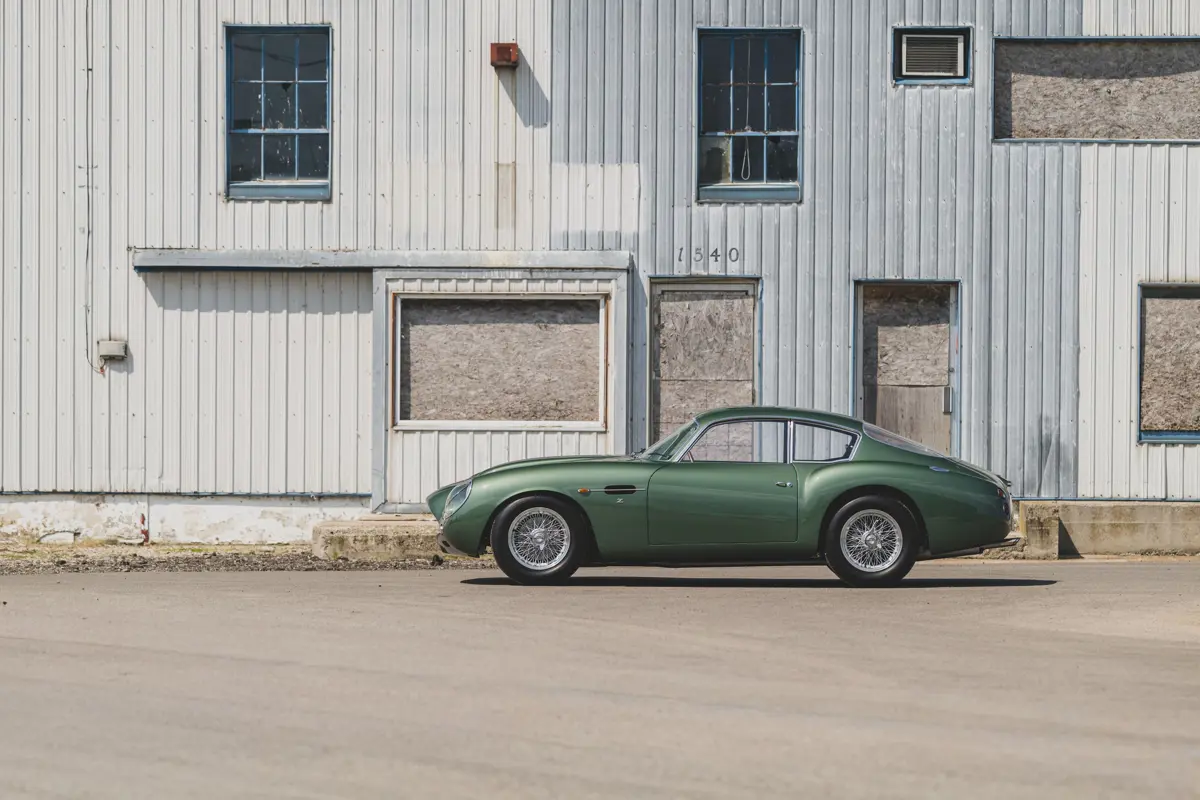
In total, Aston Martin had produced only 19 DB4 GT Zagatos and 0186/R was the 14th of those. It was completed in December 1961 and shipped to Australia for Laurie O’Neill, who lived in the Strathfield area of Sydney.
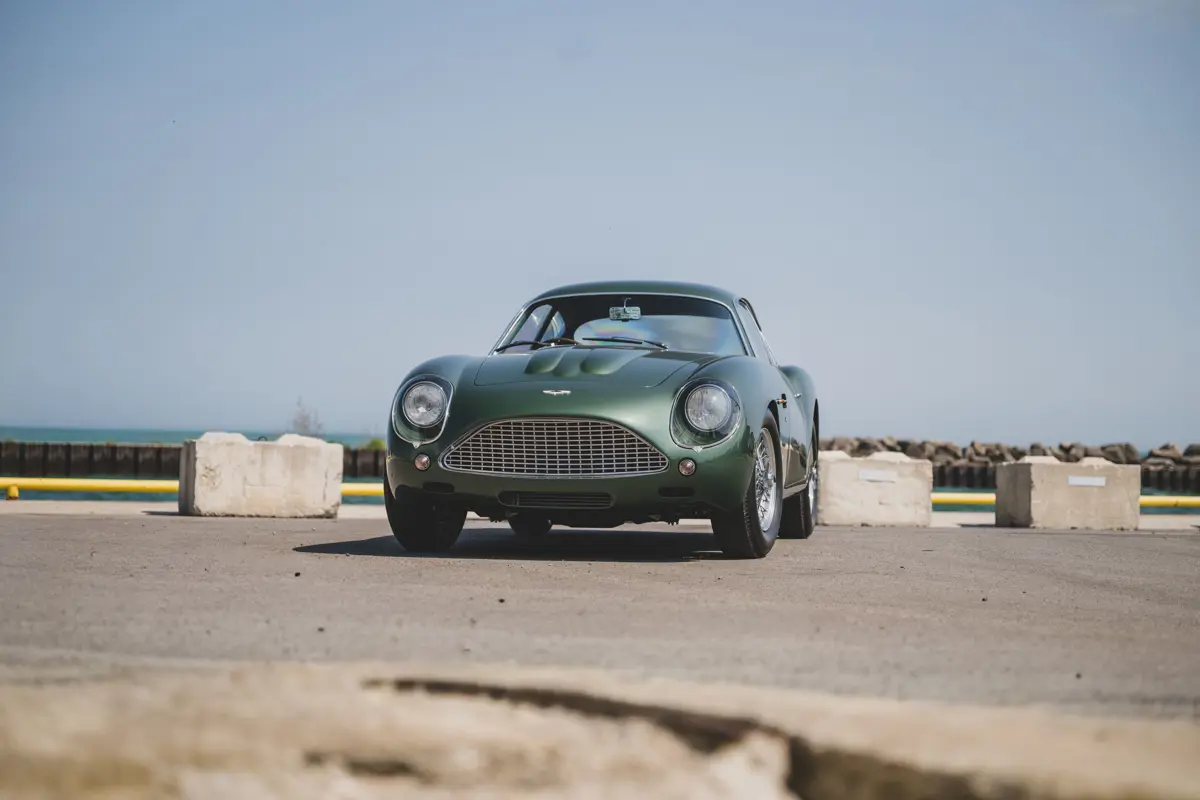
His business interests included quarrying and transport, but he was also a great racing enthusiast. He would often be seen driving around in one of his many cars, which included a Jaguar XKSS as well as the Aston, while his wife drove an eye-catching pale-blue Chevrolet Impala.
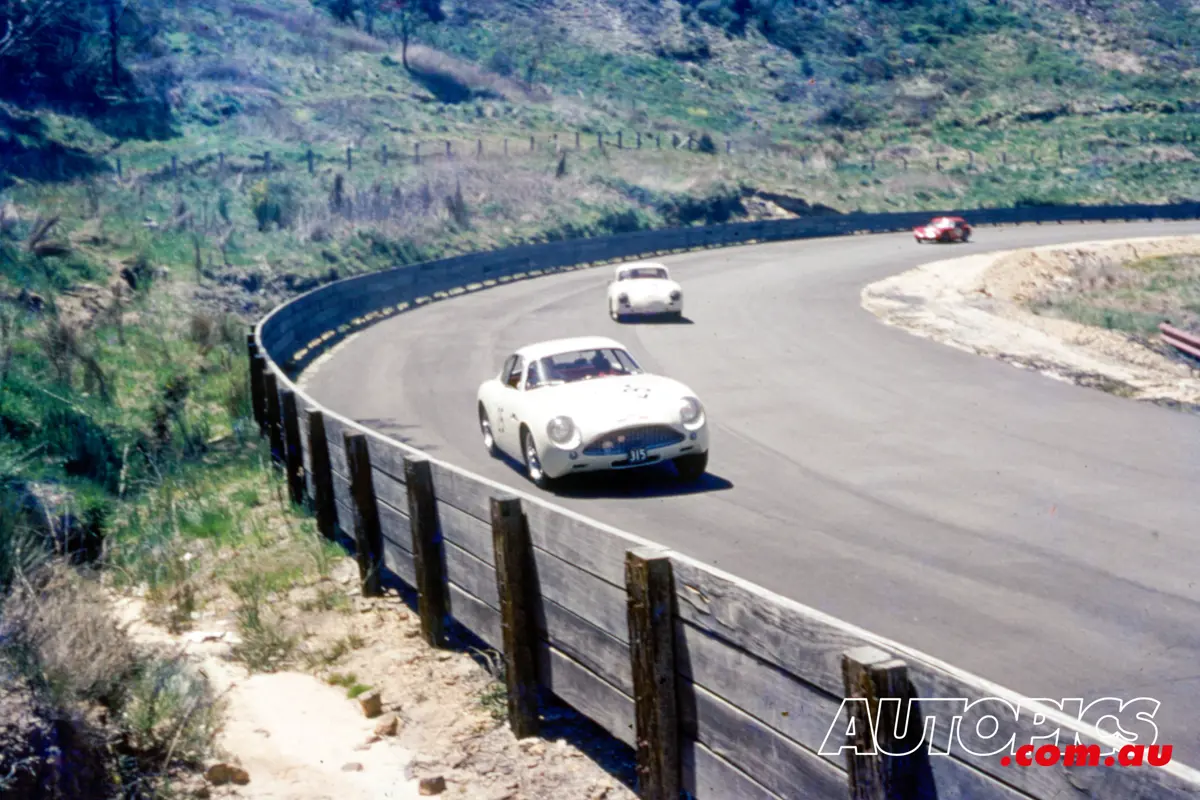
O’Neill’s Zagato was the only one to be delivered new to Australia and must have attracted a great deal of attention during the 1962 season in which it was mostly driven by Doug Whiteford. By then in his mid-40s, Whiteford had won the Australian Grand Prix three times during the early 1950s, had successfully raced a Maserati 300S later that decade, and was clearly still a formidable talent.
His first three outings in the Aston all ended in victory, a handicap event at Calder, then two races at the formidable Longford road circuit, which had a wooden bridge and a level crossing among its many challenges.

Later that year, O’Neill himself twice took his Aston to class victory at the Silverdale hillclimb, while Ian Geoghegan, later to become a five-time winner of the Australian Touring Car Championship, closed its 1962 account with another class win, this time in a GT Scratch Race at Catalina Park.
O’Neill sold the Aston ahead of the 1963 season, but it remained in Australia, first with Colin Hyams and then Alex Copland, who bought it in 1968 and kept it for more than 20 years.
In 1993, it was bought by Aberdeen-based enthusiast Graeme Speirs and recommissioned in preparation for historic events such as the Goodwood Revival, in which it was entered in 1998 and 1999.
Having been acquired by Peter Read, 0186/R was then given a full restoration, with the mechanical work being carried out by marque specialist RS Williams and the bodywork, rare among these cars for its originality, entrusted to Zagato itself.
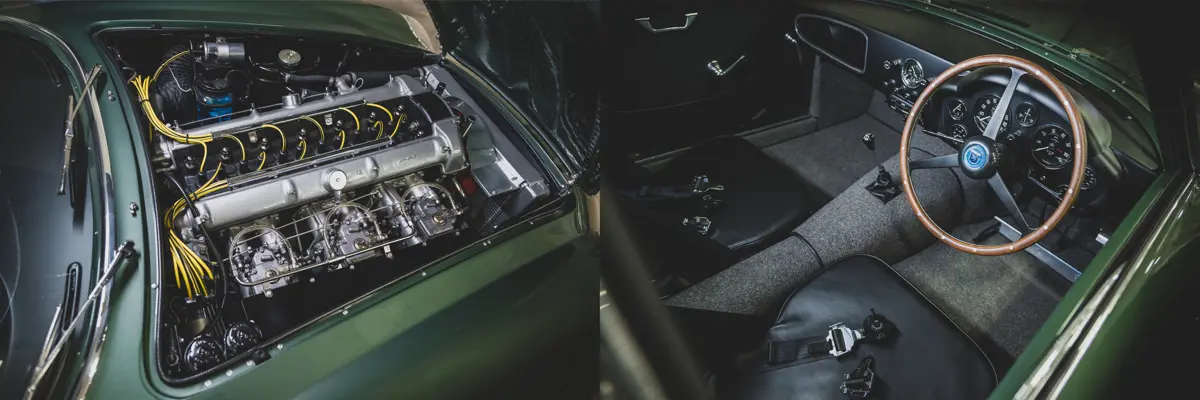
The process took two years, following which the Aston picked up multiple concours awards before being sold via RM Sotheby’s in 2015, when it became the most valuable British car ever sold at auction.
It’s not hard to see its enduring appeal. While conceding that he did it in double-quick time, Ercole Spada said that it was his favourite design, even allowing for the fact that he subsequently worked on cars such as Alfa Romeo’s wonderful little TZ and TZ2.
Not only that, the DB4 GT Zagato also marked the beginning of an enduring relationship between a quintessentially British marque and one of the most renowned Italian coachbuilders, a relationship that, in its own way, has been every bit as significant for the latter as its early association with Alfa Romeo.
Even for those who never saw Jim Clark wrestling one around Goodwood, headlights ablaze and on full opposite lock, it’s clear that this is a landmark model in the long histories of both Aston Martin and Zagato.