This is the story of one of automotive history’s most enduring—and unpredictable—partnerships.
Aston Martin and Zagato have never had what you might call a conventional relationship. There has been no tidy production agreement and certainly no sense that either side has ever been especially interested in playing it safe.
Instead, every so often Aston has handed Zagato the keys, stood well back and waited to see what happened. Sometimes the result has been traditionally beautiful. Sometimes it has been challenging. Yet the partnership has endured for more than six decades because the cars have almost never been boring.
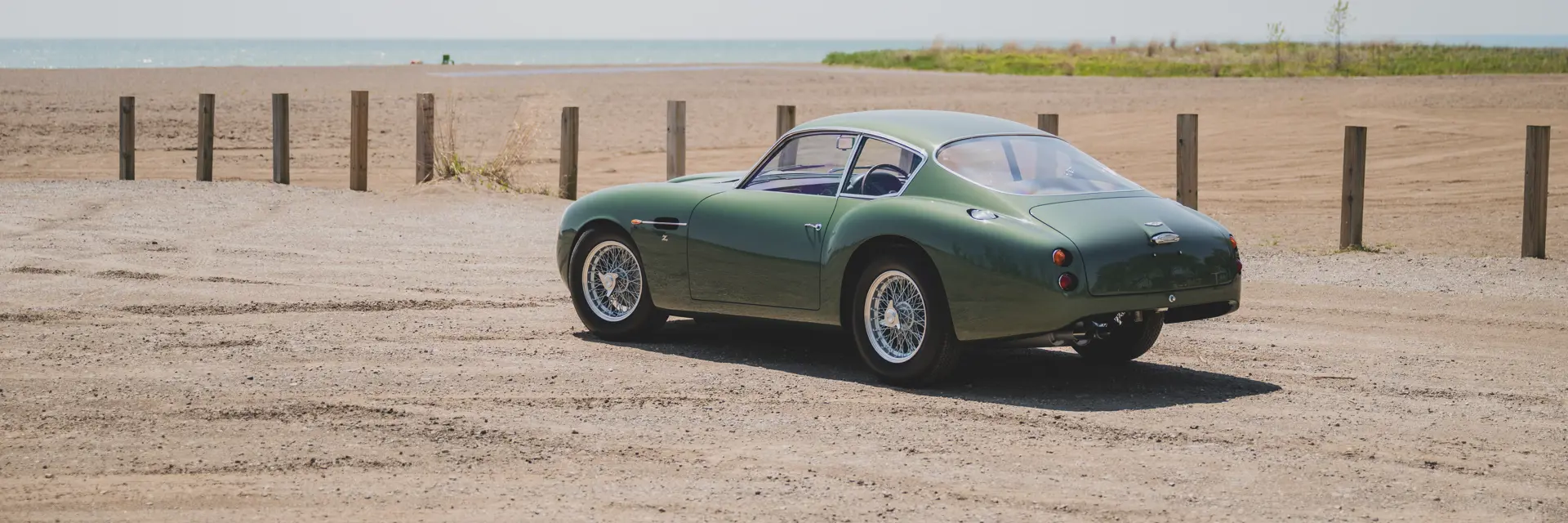
True to Zagato form, the partnership came via racing necessity. By 1960 Aston Martin already had the DB4 GT, itself a shorter, lighter, and faster version of the DB4, but Ferrari’s 250 GT SWB was giving it a thoroughly unpleasant time in competition. The answer was to send the car to Zagato, where 23-year-old Ercole Spada produced a new aluminum body that was lighter, smaller and far more aggressive than the standard Aston.
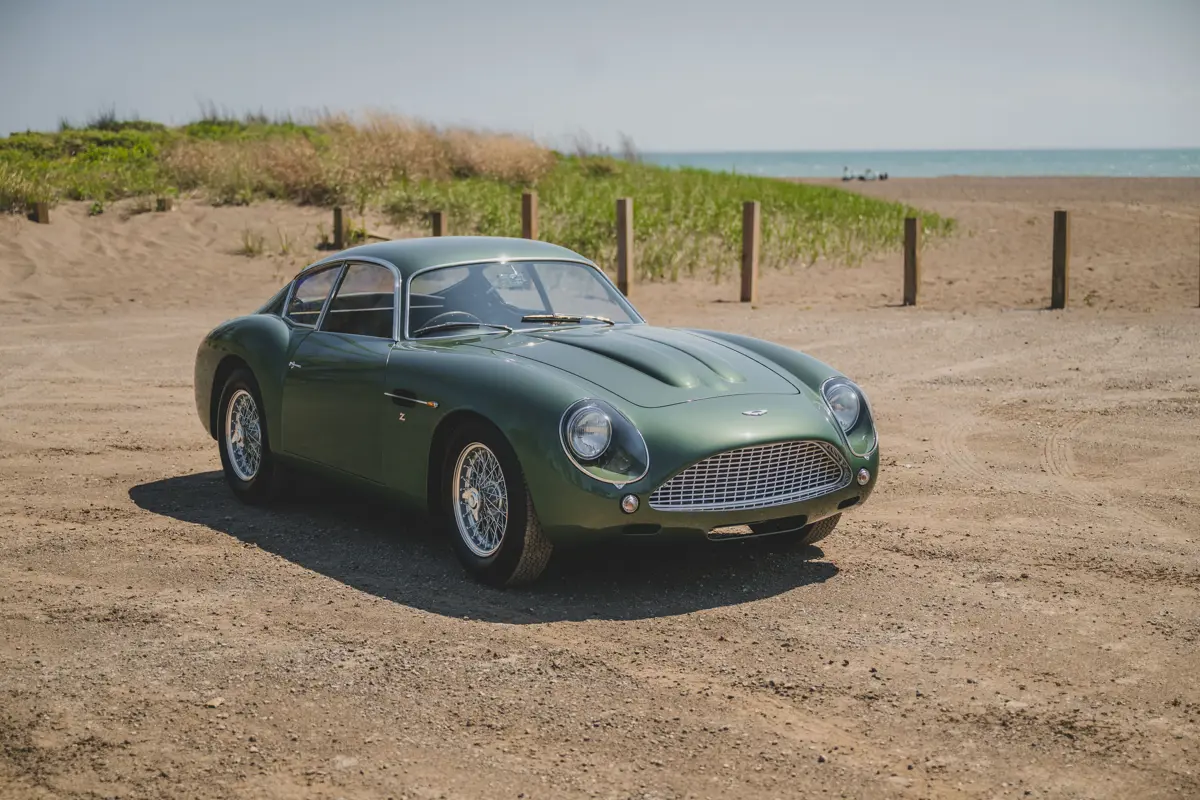
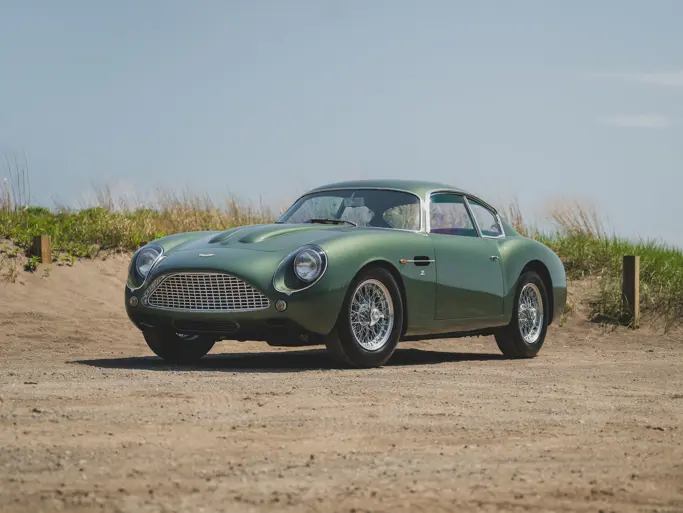
The 3.7-liter straight-six gained twin-plug ignition and a claimed 314 brake horsepower, while weight fell substantially. Aston planned 25 but only 19 were completed. Demand simply fell short of expectations at the time, although the legend grew considerably in the decades that followed, even if the hoped-for dominance over Ferrari never quite transpired.
It was the presence of another Ferrari at the Geneva Motor Show in the early 1980s that prompted Zagato to clothe another Aston Martin.
The seeds of the reunion were sown more than 20 years later. At the 1983 Geneva Motor Show, Aston Martin chairman Victor Gauntlett saw Zagato’s Alfa Romeo Zeta 6 and liked it enough to buy one. A year later Gauntlett and Peter Livanos found themselves discussing a new Aston with Elio and Gianni Zagato at Geneva. The timing helped. Ferrari’s new 288 GTO was demonstrating that customers would happily put down serious money for an expensive, limited-production special.
The resulting V-8 Vantage Zagato was announced at Geneva in 1985, before the production-ready car appeared there a year later. Even today, it remains a polarizing piece of design. The wheelbase was shortened, the rear seats disappeared, and almost every surface seemed to have been attacked with a set square—automotive brutalism in all its glory. Flush glazing helped the aerodynamics, while the enormous bonnet bulge existed because the Vantage’s vast Weber carburetors needed somewhere to live. Aston was chasing a claimed 186 mph, so subtlety was not really the game here.
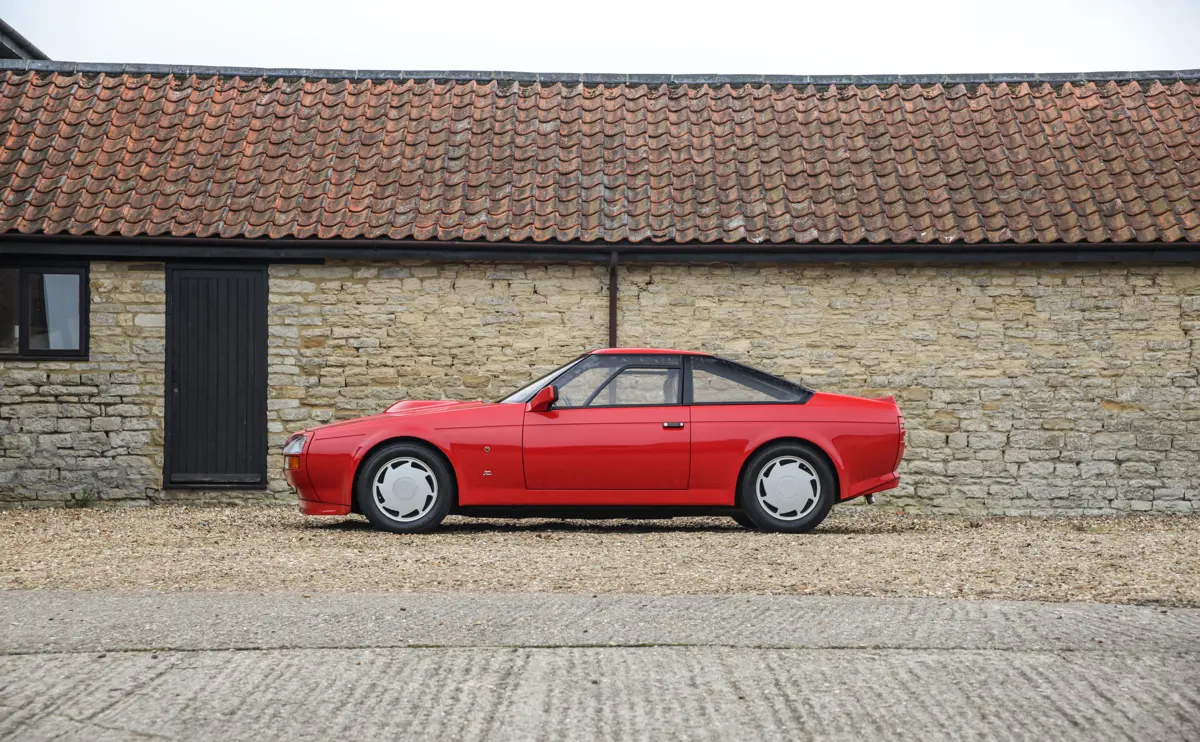
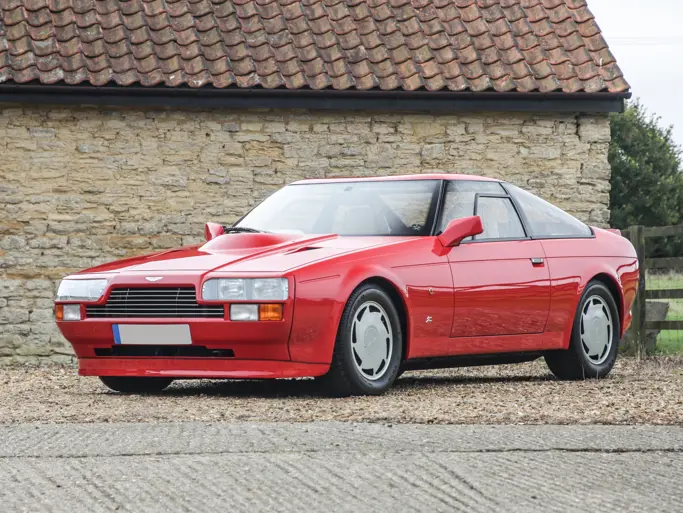
All 50 customer coupes were spoken for before production began. The collaboration became even closer when Aston Martin Lagonda acquired a 50 percent stake in Zagato. A Volante followed, losing the coupe’s carburetors and much of that extraordinary bonnet bulge; 37 were built.
There was also one spectacular dead end. In 1988 Zagato unveiled the Lagonda Rapide DP2051 at Geneva, exploring what a more luxurious Aston-Zagato might look like. Calling it a prototype is being generous: Zagato had obtained an engineless Aston Martin V8 rolling chassis, shortened it and built a full-size styling mock-up from steel tube, plywood, expanded foam and filler, complete with painted-on windows.
The result was an angular two-door Lagonda with a peculiar downward kink behind the A-pillar and little of William Towns’ brutal futurism. Production never followed and DP2051 disappeared from view, although the mock-up is understood to survive in private ownership.
The next genuinely new chapter arrived with the DB7 Zagato. Conceived after a conversation between Ulrich Bez and Andrea Zagato at Pebble Beach in 2001, it took the increasingly familiar DB7 and gave it renewed menace. The wheelbase was shortened, the rear seats removed and the body redrawn with a huge grille, muscular rear haunches and, naturally, Zagato’s double-bubble roof. Its 5.9-liter V-12 produced 440 brake horsepower and was paired with a six-speed manual gearbox.
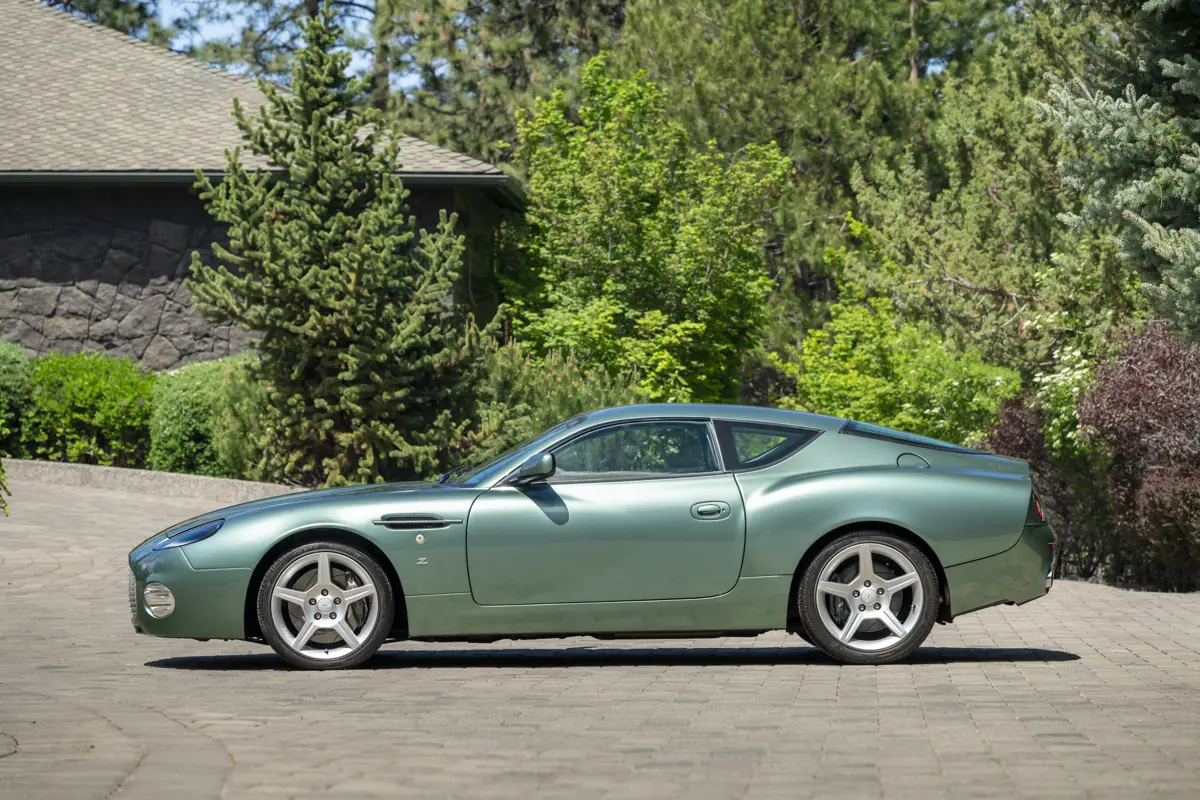
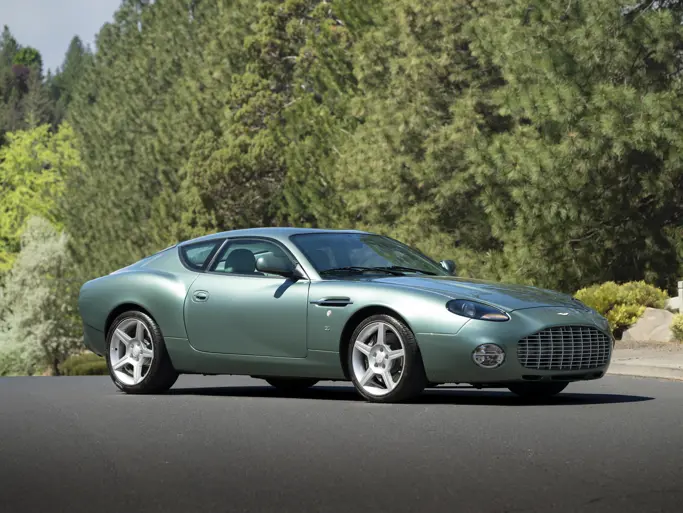
Just 99 were offered, but North America missed out because the car could not be homologated there. Zagato and Aston therefore created the DB AR1 instead, using the DB7 Volante chassis and dispensing with the roof altogether. There was no hood at all, merely a cover to protect the cockpit when parked. Another 99 were built.
There was one more experiment before the partnership went quiet again. The Vanquish Roadster Zagato appeared at Geneva in 2004, based on a pre-production V-12 Vanquish chassis. Zagato largely left Ian Callum’s nose alone but removed the roof, remodeled the rear bodywork and fitted a transparent panel behind the seats incorporating a pair of shallow Zagato humps. It was fully operational and production was discussed, but only the show car was built.
The V-12 Zagato of 2011 returned some competition zest to the relationship. Based on the V-12 Vantage, it used aluminum and carbon fiber bodywork and took the elegant base model and turned it into something far more challenging. However, this was no mere bark, as it would prove its bite in motorsport. Two competition versions entered the Nürburgring 24 Hours before road production began, reconnecting the project with the intent of the original DB4 GT Zagato.
The centenary year brought a particularly neat Zagato trilogy. First came the DBS Coupe Zagato Centennial and DB9 Spyder Zagato Centennial in 2013, both one-offs commissioned by private clients rather than conventional factory projects. The DBS, built for a Japanese collector, retained the 510 brake horsepower 5.9-liter V-12 and running gear of the standard car but wore completely new Zagato bodywork, including the obligatory double-bubble roof and a far more abrupt tail. The DB9 Spyder, commissioned by collector Peter Read, used a DB9 Volante as its basis and took a softer, more classically proportioned route, with bespoke front and rear treatment and no need for the roof bubbles at all.
Then, in 2014, came the Virage Shooting Brake Zagato Centennial, another one-off and arguably the strangest of the three. Based on the short-lived Virage, it added an extended roof and proper estate-style rear bodywork while retaining the familiar V-12 drivetrain. Together, the trio showed how freely Zagato could reinterpret Aston’s contemporary range: coupe, roadster, and shooting brake, all recognizably related yet very different. It was less a coherent model family than three bespoke answers to the same question: How far could Zagato push an Aston without losing the Aston underneath entirely?
Then there was the Vanquish Zagato family of 2016 and 2017: Coupe, Volante, Speedster, and Shooting Brake versions were produced, all based on the 592 brake horsepower Vanquish S. There were 325 in total, but the interesting part was how Zagato kept manipulating its own visual signatures. The double-bubble became roof humps on the coupe, aerodynamic cowls on the Speedster, and an elongated canopy on the Shooting Brake.
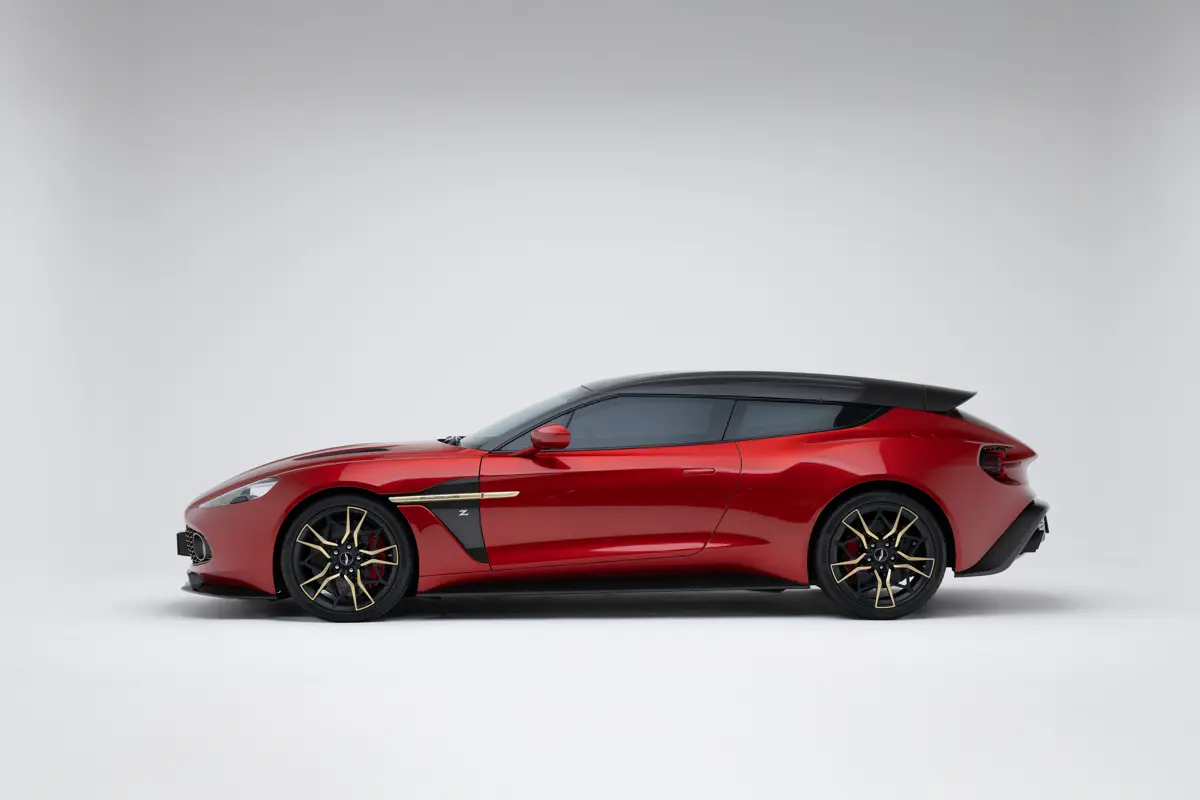
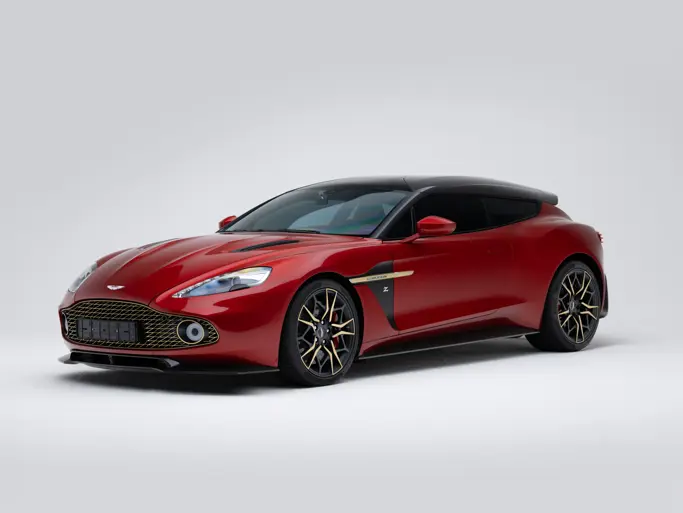
That last car was particularly challenging, in the best traditions of Zagato. It was still a two-seater, so the phrase Shooting Brake was doing some fairly athletic stretching, but it showed how the relationship had evolved from racing to avant-garde art with wheels.
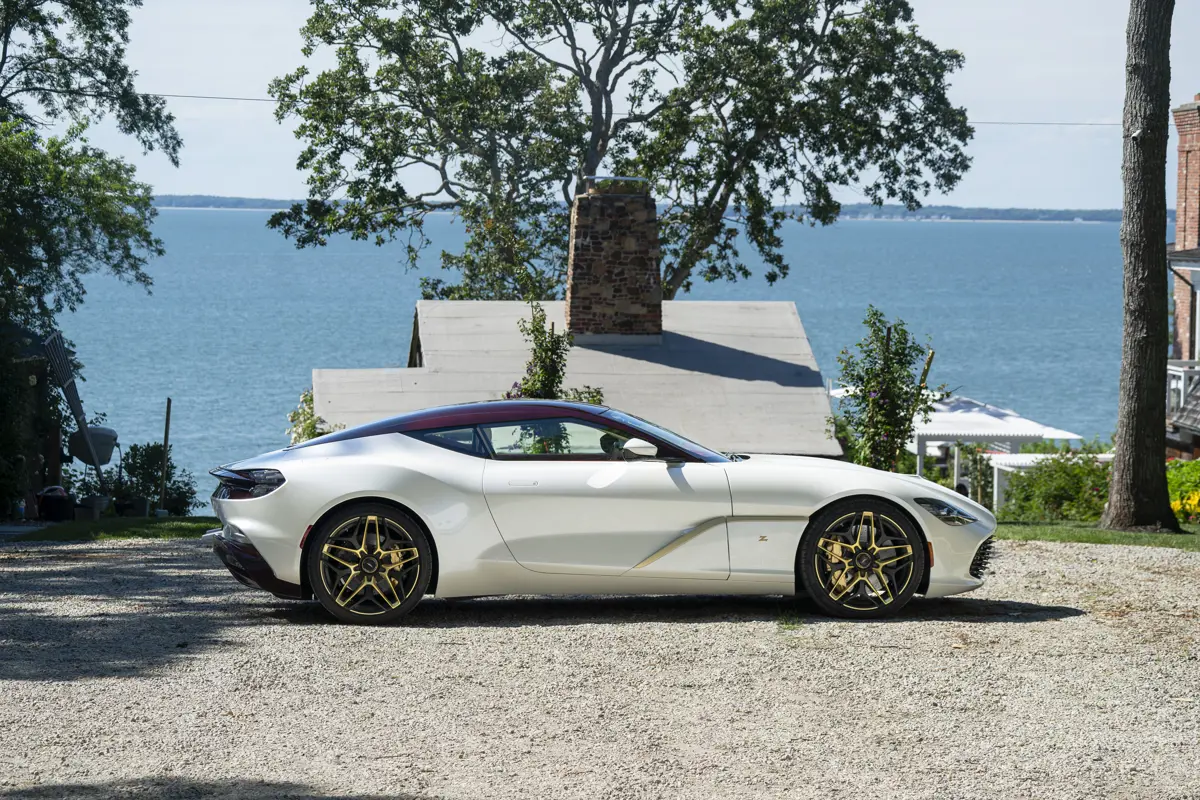
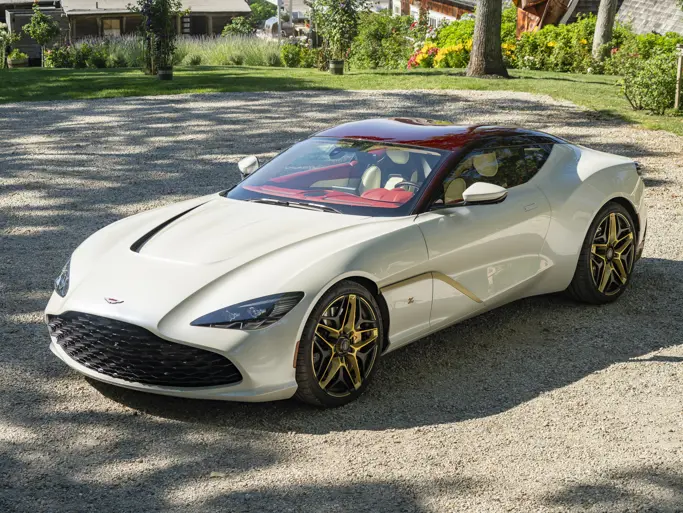
However, the final collaboration thus far brought the two philosophies back together. The DBZ Centenary Collection of 2019 comprised a DB4 GT Zagato Continuation and a DBS GT Zagato, sold only as one of 19 pairs at £6M plus taxes.
Each Continuation took around 4,500 hours to build at Aston Martin Works in Newport Pagnell. Engineers created a digital body buck to analyze the original Zagato shape, but the 1.2mm aluminum panels were then formed and finished by hand using broadly period techniques before being fitted over a lightweight tubular structure.
Underneath sat a 4.7-liter development of Aston’s straight-six producing more than 390 brake horsepower, connected to a four-speed manual gearbox and limited-slip differential. Its partner was based on the DBS Superleggera, but with the 5.2-liter twin-turbo V-12 tuned up to 760 brake horsepower and wrapped in an entirely different body. A single carbon fiber roof panel replaced the conventional roof and rear window, requiring a camera-based rear-view mirror, while the grille comprised 108 individual carbon fiber diamonds that sat flush when parked and opened on start-up to feed the V-12. It was Zagato heritage viewed from opposite ends of the telescope: One recreated 1960 painstakingly, the other asked what the same partnership could demonstrate decades later.
Zagato and Aston Martin is a combination that has endured—they may not be universally adored, but you certainly cannot ignore them. True automotive art.